

 1-877-817-6687


When a concrete joint saw needs to track straight, cut to exact depth, and do it all while keeping the work area clean, the Mark IV Dust Buggy is the tool contractors reach for.
Among small electric joint saws, it stands out for precision cleanout work: detail cuts, confined spaces, and jobs where the larger propane and gas machines are too much saw for the application.
This post covers what makes the Mark IV different, how it’s built, what it can do that most small saws can’t, and how to get the most out of it on the job.
Built for Precision: The Geometry Behind the Mark IV Concrete Joint Saw
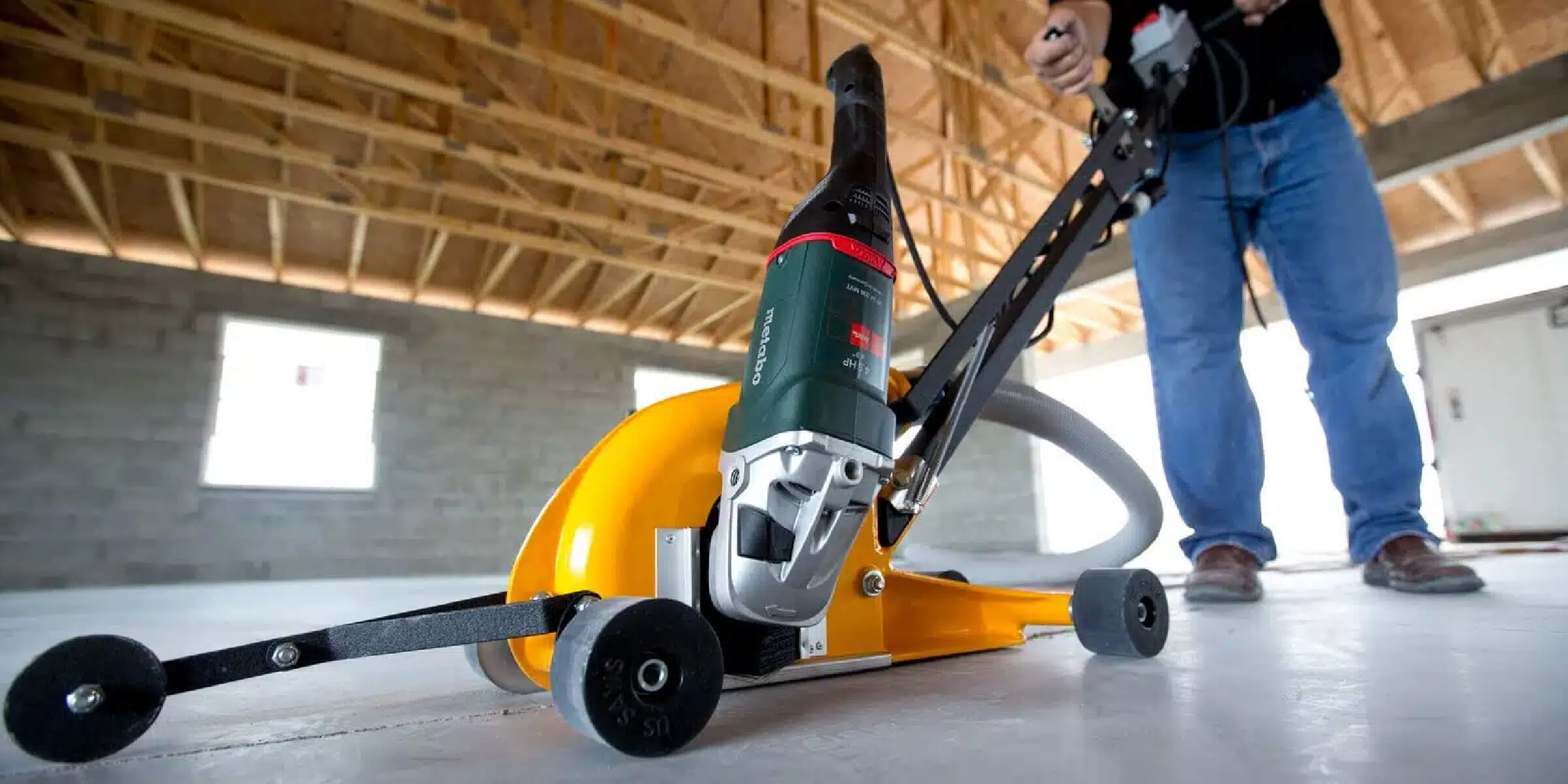
Most small concrete joint saws put the operator behind or beside the machine, which means they’re steering a platform rather than the blade itself. The Mark IV is designed differently. You push directly behind the blade and in the center of the wheels, so the feedback from the cut comes straight back through the handle. Staying centered in the joint is intuitive rather than something you have to compensate for.
That direct feedback matters most for less experienced operators. The blade’s contact with the sidewalls and bottom of the joint gives instant tactile feedback, so wandering off-line is easy to catch and correct before it becomes a problem.
The Mark IV is engineered to cut concrete joints up to 2” deep, with a built-in depth lock that prevents overcutting. It accepts 7” or 8” blades up to .375” wide with a 7/8” arbor, giving you flexibility across different joint widths and applications.
“The Mark IV combines simple operation with excellent blade visibility and precision guides, making it the right tool for operators at every experience level.” — Suzanne Snyder, Surface Prep Sales Manager, U.S. Saws
Dust-Free Concrete Joint Saw Operation
U.S. Saws has led the industry in dust control for years, and the Mark IV reflects that. The blade guard channels dust straight up, and right where it begins to lose momentum, the vacuum port is positioned to capture it. The angle and direction of capture make a real difference on the job site compared to old methods or competing tools.
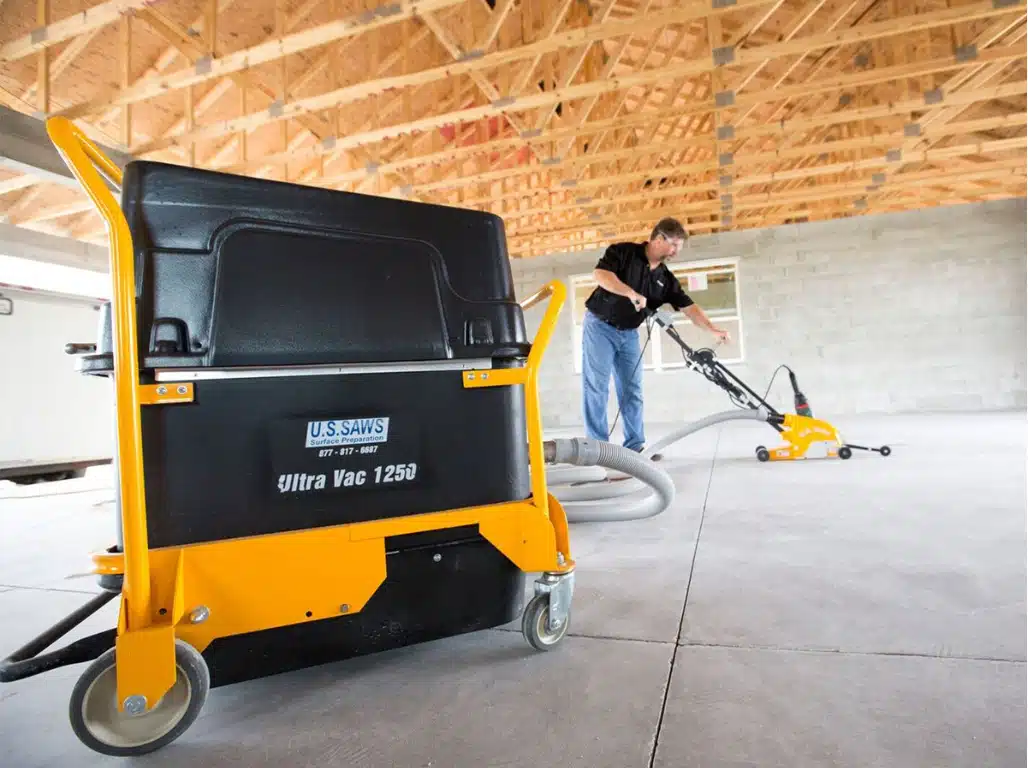
Connected to a vacuum with at least 200 CFM, the Mark IV operates virtually dust-free. That 200 CFM threshold meets OSHA’s requirement of 25 CFM per inch of blade diameter for silica dust control under 29 CFR 1926.1153. A standard big-box wet/dry vac won’t reach that threshold. U.S. Saws recommends the Ultra Vac 1250 for peak performance.
“Thanks to its upcut design, the Mark IV operates virtually dust-free, making it especially well-suited for indoor jobsites.” — Suzanne Snyder, Surface Prep Sales Manager, U.S. Saws
Mark IV Joint Saw Construction: Built to Last
The chassis is solid cast aluminum, the same high-grade alloy used in automotive wheels, heat-treated and machined on a CNC for consistent accuracy. U.S. Saws backs it with a 99-year warranty. The only component that wears with use is the grinder motor, which can last years with proper power and cord management.
The Mark IV comes in two configurations:
- Mark IV Standard is powered by a Metabo W24-230 (15A). It’s the right choice for general joint cleanout, longer cord runs, and open spaces where a standard 15-amp circuit is available.
- Mark IV Pro steps up to a Metabo W26-230 and performs best on a 20-amp breaker with shorter, heavier-gauge cords. It’s purpose-built for heavy-duty work: joint filler removal, full-depth cutting, and high-production applications where maximum power delivery matters.
Smart Features That Matter on the Job
The Mark IV includes a set of purpose-built features that add up on the job:
- Blade limiter and depth lock. Set the exact cut depth and the saw holds it. No overcutting, no guesswork.
- Viewing slot in the blade guard. The guard fully covers the blade for safety but includes a slot so the operator can watch the blade enter the cut. The guard is also removable for quick blade changes.
- Front and rear pointers. Alignment is straightforward even on long runs.
- Voltmeter, ammeter, and magnetic safety switch. The switch resets when power is lost, eliminating accidental restarts. The meters let the operator monitor power in real time.
- Adjustable handle height and rotating frame. The handle adjusts for operator comfort, and the frame rotates to get the saw closer to walls, racks, and tight corners.
- New motor bracket design. Grinder swaps are faster and easier than previous versions.
Polyurea Removal with the Mark IV Concrete Joint Saw
One capability that separates the Mark IV from lighter-duty saws is its ability to remove polyurea joint filler. Standard diamond blades load up on polyurea because the material is flexible and heat-resistant. The solution is U.S. Saws’ Tiger Tooth Blades, which are designed specifically for this application.
With the Mark IV and Tiger Tooth Blades, expect production rates of 3–6 feet per minute at ½” depth in a .125” joint width, faster at shallower depths. The Pro version on a 20-amp circuit delivers maximum power for the heaviest removal work. For new construction joint cleanout, the machine moves at up to 50 feet per minute.
For a full breakdown of concrete joint preparation and when to remove old filler, including when to use the Tiger Tooth Blade versus a standard diamond blade, see our joint cleanout guide.
Who the Mark IV Joint Saw Is Built For
At 51 lbs, the Mark IV is substantial enough to feel planted and stable, but manageable enough for a single operator to run all day. It’s the right concrete joint saw for:
- Flooring and concrete contractors doing control joint cleanout before polyurea or epoxy filler
- Detail work in tight spaces, near walls, racks, or columns where larger saws can’t fit
- Residential and light commercial work where production volume doesn’t justify a propane machine
- Decorative concrete cuts, where the Mark IV often matches or beats dedicated decorative saws in accuracy
- Polyurea filler removal when paired with Tiger Tooth Blades
Mark IV Joint Saw: Power and Cord Management Tips
Power management is the biggest variable in motor longevity. Use extension cords under 100 feet and keep them as heavy-gauge as practical. Always test generator voltage before use and keep it between 110 and 120 volts. For heavy removal work, use the Pro version on a 20-amp circuit with short cord runs to ensure maximum power delivery.Concrete joint cleaning generates silica dust, so always connect to a compliant vacuum before starting. Running the saw dry, even briefly, is both an OSHA compliance issue and a fast way to contaminate a joint that took time to prep.
See the Mark IV Dust Buggy
The Mark IV Dust Buggy is available in Standard and Pro configurations. View full specs and order at ussaws.com/product/joint-clean-out-saw.