

 1-877-817-6687


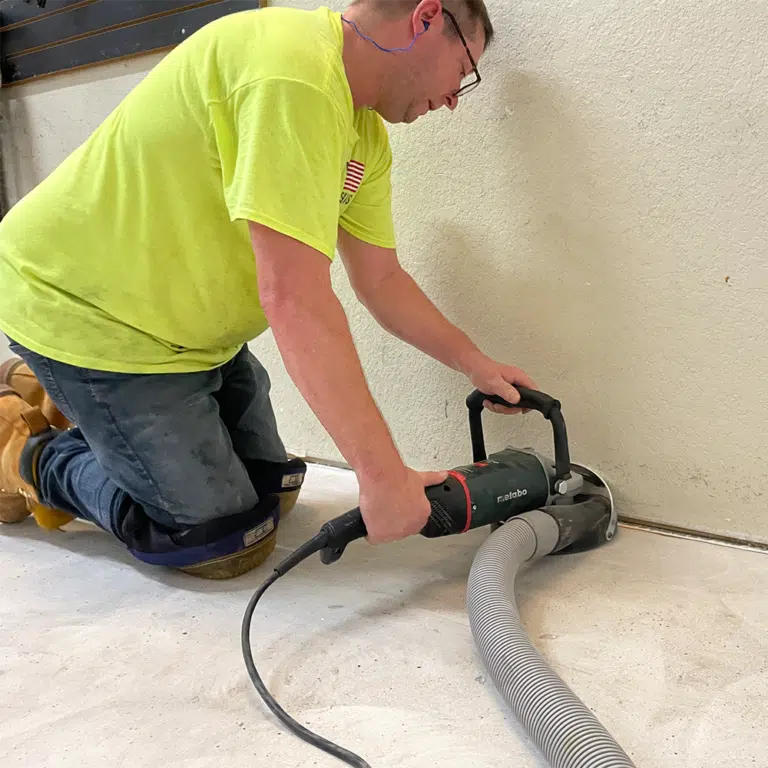
When it comes to concrete surface preparation, the difference between a professional finish and an amateur result often comes down to critical components working in harmony: the right grinder, the right diamond tooling, and most importantly, the right dust shroud. While diamond cup wheels and high-powered grinders get most of the attention, the unsung hero of dustless concrete grinding is the dust collection shroud that keeps your workspace clean, your crew healthy, and your equipment running longer. With over 30 years of experience in the concrete repair industry, we understand what contractors need: innovative products that improve job site productivity and safety while delivering real value. In this comprehensive guide, we’ll explore everything you need to know about dust shrouds for concrete grinders and why professional-grade equipment makes all the difference.
Understanding Dust Shrouds: The Foundation of Professional Concrete Grinding
A dust shroud, also known as a vacuum shroud or dust extraction hood, is a protective housing that attaches to an angle grinder or concrete grinder to capture silica dust and debris during grinding operations. With OSHA’s stringent silica regulations and growing awareness of respiratory health hazards, dust shrouds have evolved from optional accessories to essential safety equipment for professional concrete contractors, flooring installers, and surface preparation specialists.
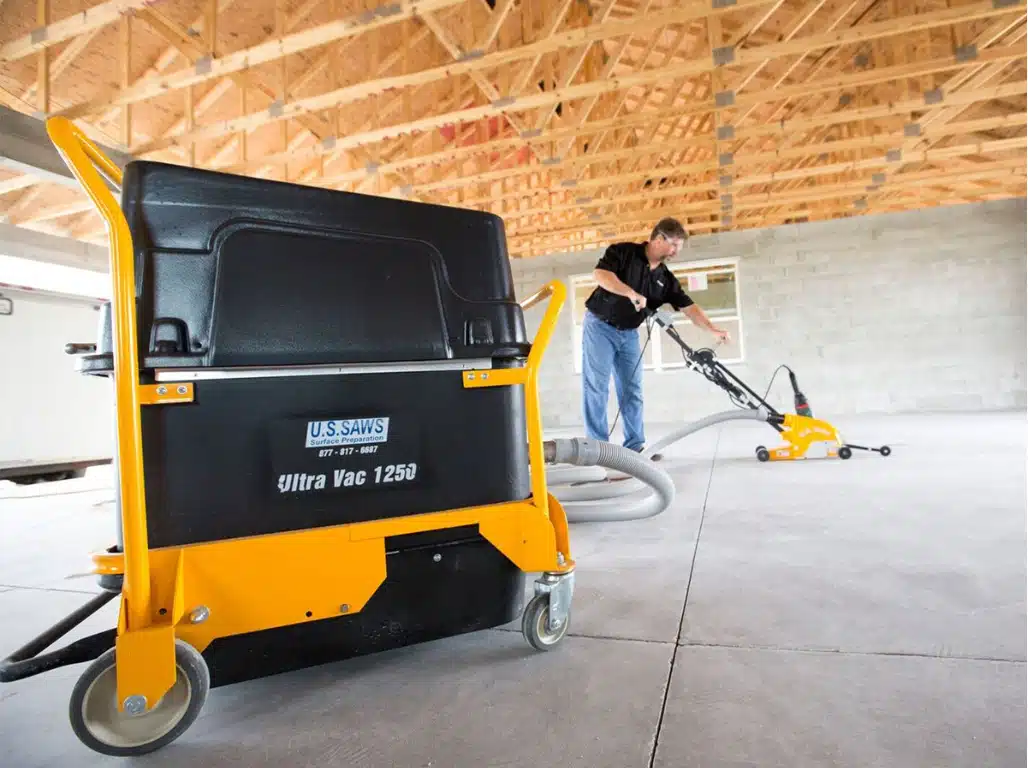
Modern dust shrouds work in conjunction with industrial vacuum systems to create a sealed environment around the grinding surface. This containment system prevents harmful crystalline silica dust from becoming airborne, protecting workers from serious health conditions including silicosis, lung cancer, and chronic obstructive pulmonary disease (COPD). Beyond health benefits, quality dust shrouds for concrete grinders extend equipment life, improve visibility during grinding operations, and eliminate costly cleanup time.
The Evolution of Dust Collection Technology in Concrete Grinding
The concrete industry has come a long way in dust collection technology. From the early days when contractors worked in clouds of silica dust with little protection, to today’s sophisticated dust management systems, the evolution has been driven by safety concerns, regulatory requirements, and innovations from manufacturers committed to contractor safety.
Early Dust Collection Challenges
Early attempts at dust collection faced significant engineering challenges. Simple hoods and guards couldn’t maintain effective vacuum seals while allowing grinders to move freely across uneven surfaces. Rigid designs prevented grinding near walls and edges. Weak materials failed under the vibration and impact of professional use. Understanding these historical challenges helps contractors appreciate the engineering sophistication in modern professional-grade dust shrouds.
Modern Design Principles
Today’s professional dust shrouds represent sophisticated engineering that balances competing demands. They must be flexible enough to maintain floor contact across surface irregularities, yet rigid enough to withstand job site abuse. They need high airflow for effective dust capture without creating excessive suction that fights grinder movement.
Understanding airflow dynamics is essential to selecting equipment that actually works in real-world conditions rather than just looking good in a catalog.
Material Science in Professional Dust Shrouds: What Makes Quality Equipment Different
The difference between professional-grade and consumer-grade dust shrouds comes down to materials and construction quality. According to materials engineering standards, proper material selection plays a crucial role in equipment performance and longevity. Professional contractors need equipment built to last through years of demanding use, not just survive a few weekend projects.
Engineered Polyurethane and Rubber Compounds
The flexible sealing portion of professional dust shrouds uses specially formulated polyurethane materials that maintain elasticity across temperature extremes, resist tearing from diamond segment contact, and provide consistent sealing pressure. Cheap dust shrouds use generic rubber that hardens in cold weather, tears easily, and loses sealing capability after minimal use.
Quality sealing materials must achieve a delicate balance: soft enough to conform to surface irregularities and maintain vacuum seal, yet firm enough to avoid tucking under the shroud during aggressive grinding. This balance ensures consistent dust capture whether grinding smooth troweled concrete or rough surfaces with significant texture.
Professional-grade materials also resist chemical exposure from alkaline concrete dust, acidic etch residues, and petroleum-based release agents common on job sites.
Structural Components: Steel and Aluminum
The rigid components of professional dust shrouds utilize steel and aluminum alloys selected for specific mechanical properties. Steel provides strength for mounting points and high-stress areas. Aluminum offers excellent strength-to-weight ratios while providing natural heat dissipation that protects equipment.
Quality construction means these components work as integrated systems, not just parts bolted together. Mounting points distribute forces to prevent stress concentration and cracking. Structural elements resist torque and vibration from high-speed grinding. The result: equipment that maintains alignment and functionality through years of professional use instead of failing after a few projects.
Essential Features of Professional-Grade Dust Shrouds
Not all dust shrouds offer the same features or performance. Understanding which features matter helps contractors make informed equipment decisions that affect productivity, safety, and total cost of ownership.
Convertible Edge Design for Wall Work
One of the most valuable features in professional dust shrouds is convertible edge capability. Basic dust shrouds prevent grinding within two to three inches of vertical surfaces, forcing contractors to hand-grind perimeters—tedious work that eliminates dust control benefits exactly where they’re needed most. Quality dust shrouds with convertible edges incorporate flip-up or removable sections that allow grinding flush against walls while maintaining complete dust capture.
This design uses the wall itself as part of the vacuum seal. Rather than fighting against vertical obstacles, convertible edge shrouds incorporate them into the containment system.
The vacuum pressure that would normally be lost near walls instead creates even more effective sealing. This innovation eliminates separate edge grinding operations, dramatically improving productivity while maintaining consistent dust control throughout entire floors.
Tool-Free Adjustment and Maintenance
Professional contractors don’t have time for complicated adjustments or frequent maintenance shutdowns. Quality dust shrouds feature tool-free designs that allow quick adjustments in the field. Spring-loaded mechanisms, friction fittings, and quick-release mounts mean contractors can switch between full-floor and edge grinding modes without searching for hex keys or dealing with multiple fasteners. This simplicity isn’t just convenient—it ensures crews actually use the dust collection features instead of working around them.
Replaceable Wear Components
Professional-grade dust shrouds feature serviceable designs with replaceable wear components. Polyurethane skirts, brush seals, and mounting hardware can be economically replaced as they wear, protecting your investment in the major structural components. We stock replacement parts and accessories to keep your equipment operating at peak performance, reducing total cost of ownership compared to disposable budget alternatives.
OSHA Silica Regulations: Why Professional Dust Shrouds Are Non-Negotiable
In March 2016, OSHA implemented comprehensive silica regulations limiting worker exposure to respirable crystalline silica. These regulations fundamentally changed concrete grinding operations, transforming dust collection from a best practice into a legal requirement. Understanding these regulations helps explain why professional-grade dust shrouds represent essential business investments rather than optional upgrades.
The 50 Microgram Standard: Understanding Exposure Limits
OSHA’s permissible exposure limit (PEL) for respirable crystalline silica is 50 micrograms per cubic meter of air, averaged over an eight-hour shift. This represents a significant reduction from previous standards, reflecting growing medical evidence about silica’s health dangers. According to NIOSH research on silica exposure, concrete grinding without dust collection easily generates silica concentrations hundreds of times higher than this limit.
Meeting this standard requires engineering controls that capture dust at the source. Dust shrouds connected to HEPA-filtered vacuum systems represent a primary compliance method for concrete grinding operations. However, not all dust shrouds provide equivalent protection. Cheap designs with poor seals, inadequate airflow, or structural failures can leave contractors in violation despite using dust collection equipment.
Table 1 Compliance: Pre-Approved Work Practices
OSHA’s Table 1 for Construction provides specified exposure control methods that, when properly implemented, are presumed to meet the PEL without requiring air monitoring.
You can review the complete OSHA Table 1 requirements for handheld grinders used for concrete surface preparation. The regulations specify: ‘Use grinder equipped with commercially available shroud and dust collection system.’
The key phrase is ‘commercially available shroud.’ This means OSHA recognizes that not all shrouds are equivalent—only properly designed commercial products provide the protection required for Table 1 compliance. DIY solutions, makeshift modifications, or cheap imported shrouds may not meet this standard, potentially exposing contractors to citations, penalties, and liability if worker illness occurs.
The Health Impact of Silica Exposure: Why Dust Control Matters
Crystalline silica exposure poses serious health risks that extend far beyond temporary respiratory irritation. Silicosis information from the American Lung Association describes it as an incurable lung disease caused by inhaling silica dust. The disease develops when silica particles become lodged in the lungs, causing inflammation and scarring that progressively reduces lung capacity.
Understanding Silicosis and Related Conditions
Silicosis can develop in three forms: acute, accelerated, and chronic. Acute silicosis can occur after only months of high-level exposure, while chronic silicosis may take decades to manifest. Beyond silicosis, silica exposure increases the risk of lung cancer, chronic obstructive pulmonary disease (COPD), kidney disease, and autoimmune disorders.
The World Health Organization recognizes occupational silica exposure as a significant global health concern. Professional dust collection isn’t just about regulatory compliance—it’s about protecting your workforce from preventable, life-altering diseases. Quality dust shrouds represent the first line of defense against these serious health risks.
The Business Case for Worker Health
Beyond the moral imperative to protect workers, effective dust control makes solid business sense. According to the CDC Workplace Health Promotion, preventing respiratory disease through proper dust control provides enormous long-term value. Reduced workers’ compensation claims, lower health insurance costs, improved employee retention, and enhanced company reputation all contribute to the bottom line. Professional dust collection equipment isn’t an expense—it’s an investment in your workforce and your business.
Selecting Professional-Grade Dust Shrouds: What Contractors Need to Know
The market offers dust shrouds at every price point, from twenty-dollar universal adapters to several-hundred-dollar professional systems. With over 30 years of experience serving the concrete construction industry, we’ve seen what works and what fails. Browse our selection of professional dust shrouds designed for demanding commercial applications.
The Hidden Cost of Cheap Equipment
Budget dust shrouds sacrifice in three critical areas: material quality, engineering precision, and durability. Thin plastics crack under vibration. Generic rubber compounds harden and lose sealing capability. Poor manufacturing tolerances create gaps that leak dust. These failures compromise dust capture, invalidate OSHA compliance, create health risks, and require frequent replacement that ultimately costs more than buying quality equipment initially.
Budget shrouds often lack features that distinguish professional tools: no convertible edge for wall work, no replaceable wear components, incompatibility with standard vacuum systems, and mounting systems that work loose during operation. A professional-grade shroud that lasts five years and enables edge-to-edge grinding represents far better value than buying multiple cheap shrouds while still hand-grinding perimeter areas.
Grinder Compatibility and Proper Fit
Many contractors are attracted to ‘universal’ dust shrouds marketed as compatible with any grinder. While appealing in theory, universal designs often compromise performance. Proper dust shroud function depends on precise positioning relative to the grinding cup, correct clearance for diamond segments, and secure mounting that prevents shifting during operation.
Professional dust shrouds are engineered for specific grinder models and cup sizes. This specialization ensures optimal performance: vacuum ports positioned for maximum efficiency, shroud clearance matching diamond segment height, and mounting providing rigid connection through extended grinding sessions. While this approach requires having the correct shroud for each grinder configuration, the performance benefits justify the specificity.
Vacuum System Requirements: Matching Your Dust Shroud with Proper Extraction
A dust shroud is only as effective as the vacuum system it’s connected to. Professional dust capture requires understanding vacuum specifications, particularly the critical distinction between CFM (cubic feet per minute) and water lift. Industrial vacuum systems designed for concrete dust differ significantly from consumer shop vacuums in specifications and performance.
CFM vs. Water Lift: Understanding the Critical Balance
CFM measures the volume of air a vacuum moves per minute—this is the specification that determines dust carrying capacity. High CFM means the vacuum can transport large quantities of concrete dust through the hose to the filter without clogging. For concrete grinding applications, minimum CFM requirements typically range from 100 to 150 CFM depending on grinder size and grinding intensity.
Water lift, measured in inches, indicates suction power—how hard the vacuum pulls. While suction might seem desirable, excessive water lift can create problems. High water lift with insufficient CFM creates strong suction that pulls the shroud tight to the floor, making the grinder difficult to maneuver while actually reducing dust capture because inadequate air volume can’t carry away debris.
The ideal vacuum for dust shroud applications prioritizes CFM over water lift. Explore our selection of industrial dust extraction vacuums specifically rated for concrete dust with HEPA filtration, adequate CFM for your application, and reasonable water lift. This balance ensures effective dust transport without fighting your shroud’s attachment to the grinding surface.
HEPA Filtration: The Non-Negotiable Standard
OSHA regulations effectively mandate HEPA filtration for concrete dust applications. Crystalline silica particles are microscopic—respirable silica measures between 0.5 and 10 microns in diameter, far too small for standard shop vacuum filters to capture. According to the EPA information on HEPA filters, HEPA filters capture 99.97% of particles 0.3 microns in diameter, ensuring that even the finest silica dust is contained rather than exhausted back into the workspace.
Beware of vacuums marketed with ‘HEPA-style’ or ‘HEPA-type’ filters—these marketing terms don’t meet the actual HEPA standard and may not provide adequate protection. True
HEPA filtration for concrete dust requires proper pre-filters to extend HEPA filter life, sealed housings to prevent bypass, and adequate filter area to maintain airflow as filters load with dust.
Diamond Cup Wheels and Dust Shroud Compatibility
While dust shroud quality matters most, diamond cup wheel selection affects dust generation and shroud performance. Modern turbo cup wheels not only provide superior grinding performance but also work more effectively with dust collection systems than traditional double-row cup wheels.
Turbo Cup Wheels: The Professional Standard
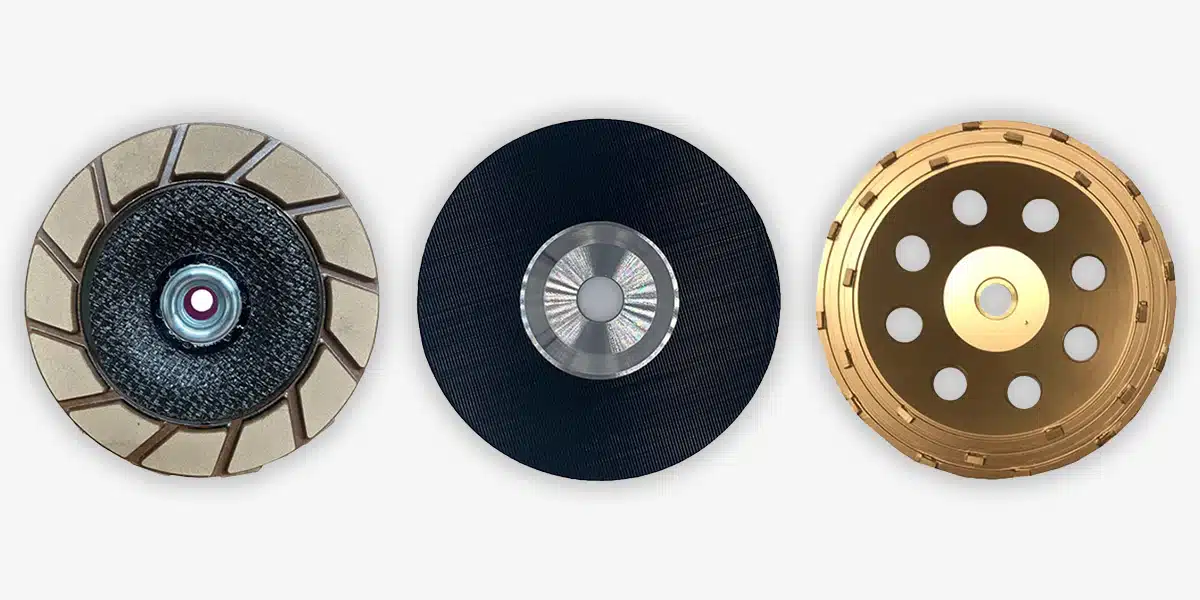
Turbo cup wheels represent the current industry standard for professional surface preparation. Their continuous rim design with turbo segments creates smoother grinding action that generates finer, more manageable dust compared to the intermittent contact pattern of double-row wheels. This consistent contact produces particle size distribution that dust collection systems capture more efficiently. View our range of diamond cup wheels and grinding tools designed to work seamlessly with dust collection systems.
More importantly, turbo wheels leave superior surface finishes. Traditional double-row wheels leave characteristic gouge marks that telegraph through coating systems, creating visible imperfections in epoxy, urethane, or polished concrete finishes. Turbo wheels produce uniformly profiled surfaces that appear smooth while maintaining the mechanical bond profile needed for coating adhesion.
Choosing the Right Grinder for Dust Collection Systems
The angle grinder or concrete grinder you select directly impacts dust collection efficiency and overall performance. Professional contractors need equipment that balances power, ergonomics, and compatibility with dust collection systems. Our professional concrete grinders are selected specifically to work optimally with dust shroud systems, providing the right combination of RPM, torque, and mounting options for serious surface preparation work.
Power and Speed Specifications
For concrete grinding with dust collection, grinders typically operate between 9,000 and 11,000 RPM with motors ranging from 4 to 7 amps. Higher amperage provides more torque for aggressive grinding through hard concrete, while the RPM range ensures optimal diamond engagement without excessive heat generation. When paired with properly designed dust shrouds, these specifications deliver professional results while maintaining effective dust capture.
Maintenance and Care: Maximizing Dust Shroud Performance and Longevity
Even the highest-quality dust shroud requires proper maintenance to deliver consistent performance over its service life. Understanding basic maintenance procedures helps contractors protect their investment while ensuring reliable dust capture that maintains OSHA compliance and worker safety.
Daily Inspection and Cleaning
The sealing skirt is the dust shroud’s critical element and requires daily inspection. Check for tears, hardening, or embedded debris that compromises flexibility. Clean concrete buildup using a stiff brush or compressed air—never scrape with metal tools that can damage the material. Verify that the skirt maintains even contact around its entire perimeter when pressed against a flat surface.
Inspect mounting hardware for tightness. Vibration loosens fasteners over time, allowing the shroud to shift during operation. This movement breaks the vacuum seal and accelerates wear. Check vacuum connection fittings for cracks or damage—a leak at this junction defeats the entire dust collection system. Clean the inside of the shroud housing, removing concrete dust buildup that can restrict airflow.
Replaceable Components and Service Life
Professional dust shrouds often incorporate brush seals around the cup wheel opening. These brushes maintain dust capture while allowing diamond segments to operate freely. Brush wear is normal—bristles should be replaced when they lose half their original length or show significant uneven wear. The sealing skirt itself is typically a replaceable wear component, allowing economical maintenance rather than complete shroud replacement.
Common Grinding Mistakes: Avoiding Craters and Bird Baths
Even with quality dust shrouds and proper equipment, operator technique significantly impacts results. According to OSHA training resources, two common mistakes plague inexperienced operators and can turn professional installations into remediation nightmares. Understanding these errors helps contractors train crews and avoid costly mistakes.
Error #1: The Static Start
The first cardinal sin is starting the grinder while stationary on the concrete surface. When diamond segments make initial contact while the wheel accelerates to operating speed, they dig in aggressively, creating a crater or gouge mark. This happens because the segments aren’t moving laterally—they’re simply boring into one spot as the motor spins up.
Proper technique requires establishing lateral motion before the wheel contacts concrete. Pull the trigger and immediately begin moving the grinder left (following the natural torque direction of wheel rotation). This creates a moving start where diamond segments engage the surface progressively rather than all at once in a single location. The result is smooth, even grinding without tell-tale start marks.
Error #2: The Lazy Landing
The second cardinal sin is releasing the trigger while the grinder remains stationary. As the wheel spins down from 10,000+ RPM to zero, those few seconds of decelerating contact create a depression or ‘bird bath’ in the concrete. Even though you’ve stopped the motor, residual kinetic energy continues grinding in one spot, leaving a noticeable divot.
Correct technique maintains lateral motion until the wheel completely stops spinning. As you release the trigger, continue moving the grinder in small circular patterns until you feel the wheel stop. This distributes the spin-down grinding over an area rather than concentrating it in one spot. The key principle: if the wheel is touching concrete, the grinder must be moving.
The Cost of Mistakes: Remediation Challenges
When contractors create craters or bird baths, fixing them isn’t straightforward. Grinding out the gouge mark to blend it into surrounding concrete creates a depression—you’ve traded a textured crater for a smooth divot. Under coating systems, these depressions become highly visible as the coating pools in the low spot, creating a darker patch that highlights the mistake. Prevention through proper technique is far superior to trying to fix grinding mistakes after the fact.
Training Your Crew: Building Professional Grinding Technique
Quality equipment is worthless without operators who understand proper technique. Workforce training and development represents one of the most valuable investments concrete contractors can make, particularly when transitioning crews to modern dust collection systems and professional grinding techniques.
The Basic Motion Pattern: Small Circles
For new operators, teach the fundamental grinding pattern: small circular motions. As you pull the trigger and begin moving left (with the natural torque), establish a circular pattern approximately 18-24 inches in diameter. This motion naturally blends grinding action across the surface, avoids linear gouge marks, and helps operators maintain awareness of the constantly moving tool.
Advanced operators may use figure-eight patterns or long sweeping arcs, but these techniques require experience to execute without leaving visible patterns. New operators should master the basic circular motion first, focusing on the critical moving-start and moving-stop techniques that prevent craters and bird baths.
Working with the Torque
Diamond cup wheels rotate clockwise when viewed from above, creating a natural torque that pushes the grinder to the left. Fighting this force creates fatigue and reduces control.
Training operators to work with the torque rather than against it improves efficiency and safety. Start movements to the left, allow the grinder to push naturally in this direction, and use the torque to help maintain consistent pressure and motion.
Environmental Impact and Sustainability in Dust Collection
Beyond worker health and regulatory compliance, professional dust collection systems contribute to environmental sustainability. According to the EPA indoor air quality guidelines, indoor air quality affects not just workers but building occupants long after construction is complete. Proper dust collection prevents silica contamination of HVAC systems, reduces cleanup requirements, and minimizes environmental release of fine particulates.
Reducing Environmental Footprint
Effective dust collection reduces the environmental burden of construction activities in multiple ways. It prevents silica dust from entering waterways during cleanup operations, reduces energy consumption associated with HVAC system cleaning and maintenance, and quality equipment that lasts for years reduces manufacturing waste compared to frequently replacing cheap tools. Selecting durable, professional-grade equipment aligns with broader environmental stewardship goals.
Total Cost of Ownership: The Real Economics of Professional Dust Shrouds
While professional-grade dust shrouds cost more initially than budget alternatives, analyzing total cost of ownership reveals their superior value proposition. Smart contractors evaluate equipment investments based on lifecycle costs rather than purchase price alone.
Direct Cost Savings
Professional dust shrouds deliver measurable savings in multiple categories. Extended grinder bearing life reduces replacement costs and downtime. Replaceable wear components allow economical maintenance rather than complete shroud replacement. Edge grinding capability eliminates separate hand grinding operations, directly improving labor productivity. Quality seals reduce vacuum filter clogging, extending filter life and maintaining suction power.
Indirect Cost Benefits
Beyond direct savings, professional dust collection impacts business operations broadly. OSHA compliance reduces citation risk and associated penalties. Improved worker health reduces workers’ compensation claims and health insurance costs. Professional results reduce callbacks and warranty work while building reputation that commands premium pricing. These factors combine to make quality dust collection equipment a sound business investment.
Industry Standards and Quality Benchmarks
The concrete preparation industry includes dust shroud options from dozens of manufacturers. Understanding industry standards and quality benchmarks, such as those established by organizations like ASTM International, helps contractors distinguish between quality professional equipment and cheap imitations that merely look similar.
What to Look for in Professional Equipment
Professional-grade dust shrouds share certain characteristics regardless of manufacturer. Look for robust construction using quality materials, not thin plastics or generic rubber.
Verify convertible edge capability for wall work. Check for replaceable wear components rather than disposable designs. Ensure compatibility with standard vacuum systems and your specific grinder models. These features distinguish professional tools from consumer products.
The Value of Industry Experience
With over 30 years serving the concrete construction industry, we understand what contractors need: innovative products that improve job site productivity and safety while delivering real value. We’re dedicated to improving contractor brand loyalty through enhanced customer service and bringing to market construction products that genuinely help contractors work more efficiently and safely. Our experience helps us identify and stock equipment that performs under real-world conditions, not just in controlled demonstrations.
Comprehensive Job Site Safety: Beyond Dust Control
While dust control is critical, comprehensive job site safety requires attention to multiple hazards. The National Safety Council provides resources on construction safety that extend beyond respiratory protection to include proper tool handling, electrical safety, and ergonomics.
Ergonomics and Operator Fatigue
Concrete grinding is physically demanding work. Proper dust shroud selection impacts operator fatigue—heavy, poorly balanced shrouds increase strain on arms, shoulders, and back. Quality shrouds use lightweight materials strategically placed to minimize weight while maintaining durability. Tool-free adjustments reduce time spent in awkward positions. These ergonomic considerations improve not just comfort but safety, as fatigued operators make mistakes that lead to injuries.
Electrical Safety with Dust Collection Systems
Operating grinders and vacuums in construction environments poses electrical hazards. Ensure adequate power supply for both grinder and vacuum—overloaded circuits create fire hazards. Use ground fault circuit interrupters (GFCIs) in wet or damp conditions. Inspect power cords daily for damage. Keep cords away from grinding areas where they could be cut. These basic electrical safety practices complement dust control measures to create comprehensive job site safety.
Maximizing Contractor Productivity with Professional Dust Collection
Professional dust collection equipment directly impacts productivity in ways that extend beyond regulatory compliance. Understanding these productivity benefits helps justify equipment investments to stakeholders who focus on bottom-line performance.
Reduced Cleanup Time
Effective dust collection dramatically reduces post-grinding cleanup requirements. Without dust shrouds, contractors spend hours sweeping, vacuuming, and wiping down surfaces to remove concrete dust that has settled on every horizontal surface in the work area. This dust infiltrates HVAC systems, light fixtures, and adjacent rooms, creating cleanup obligations that extend far beyond the immediate work zone. Professional dust shrouds capture 95-99% of generated dust at the source, essentially eliminating this cleanup burden.
Improved Visibility and Precision
Working in clouds of concrete dust makes it difficult to see the surface being ground, leading to uneven results, missed spots, and areas ground too aggressively. Professional dust collection maintains clear visibility throughout the grinding process, allowing operators to see exactly what they’re doing in real time. This visibility improves quality, reduces rework, and enables operators to work more confidently and efficiently.
Faster Project Completion
When contractors can grind edge-to-edge without switching tools, work without cleanup delays, and maintain clear visibility throughout the process, projects complete faster. For commercial contractors billing by the project, this speed translates directly to profitability—completing the same work in less time means higher effective hourly rates and the ability to take on more projects. This productivity advantage often justifies premium equipment costs within months.
Selecting the Right Equipment Supplier: What Experience Brings to the Table
Choosing quality dust shrouds is important, but selecting the right supplier matters equally. Experienced suppliers provide value beyond product sales through technical expertise, application support, and comprehensive service that keeps equipment performing optimally throughout its lifecycle.
Technical Expertise and Application Support
With over 30 years of experience in the concrete repair industry, we’ve seen virtually every surface preparation challenge contractors face. This experience allows us to provide application-specific recommendations rather than generic product sales. Whether you’re grinding overlay removal, preparing floors for coatings, or polishing decorative concrete, we can recommend the dust shroud, vacuum, and tooling combinations that deliver optimal results for your specific applications.
Inventory and Parts Availability
Equipment failure mid-project can be catastrophic for contractors working under tight deadlines. Experienced suppliers maintain comprehensive inventories of replacement parts, wear components, and backup equipment. When a polyurethane skirt tears or a brush seal wears out, getting replacement parts immediately keeps projects on schedule. We stock parts for all equipment we sell, ensuring contractors can get back to work quickly when maintenance is needed.
Warranty Support and Service
Professional equipment comes with warranties that protect your investment, but warranty value depends on supplier responsiveness. We handle warranty claims efficiently, minimizing downtime and paperwork for contractors. Our long-standing relationships with manufacturers ensure rapid resolution of any issues that arise. This service commitment distinguishes experienced suppliers from online retailers who simply drop-ship products with no ongoing support.
Conclusion: Investing in Professional-Grade Dust Collection
Dust shrouds have evolved from optional accessories to essential safety equipment that protects worker health, ensures regulatory compliance, extends equipment life, and enables professional-quality results. For concrete contractors, flooring installers, and surface preparation specialists, quality dust shrouds represent essential business tools rather than optional accessories.
Choosing professional-grade dust shrouds ensures you’re getting equipment designed for demanding professional applications, built from materials selected for durability, and backed by suppliers with deep industry knowledge. While cheaper alternatives might appear adequate initially, the job site quickly reveals the difference between equipment designed for occasional DIY use and tools engineered for daily professional operation.
For professional contractors serious about worker safety, regulatory compliance, and quality results, the choice is clear: invest in professional-grade dust shrouds from experienced suppliers who understand your needs. Your crew’s health, your business reputation, and your bottom line all depend on using equipment that performs as designed, day after day, project after project. That reliability comes from professional-grade tools backed by decades of industry experience and commitment to contractor success.