

 1-877-817-6687


Edge grinding is one of the most visible parts of any concrete floor, and it is also the part that punishes the crew the most. Edges sit right where everyone looks, so when they are off, they stand out.
The pros who do this work take real pride in a clean finished floor, which means subpar edges are never acceptable. The problem is that getting great edges the traditional way is brutally labor intensive. You are on your hands and knees, hunched over for hours, putting heavy strain on your knees and your back. Even the best operators usually hold full production speed for only the first few hours before fatigue takes over.
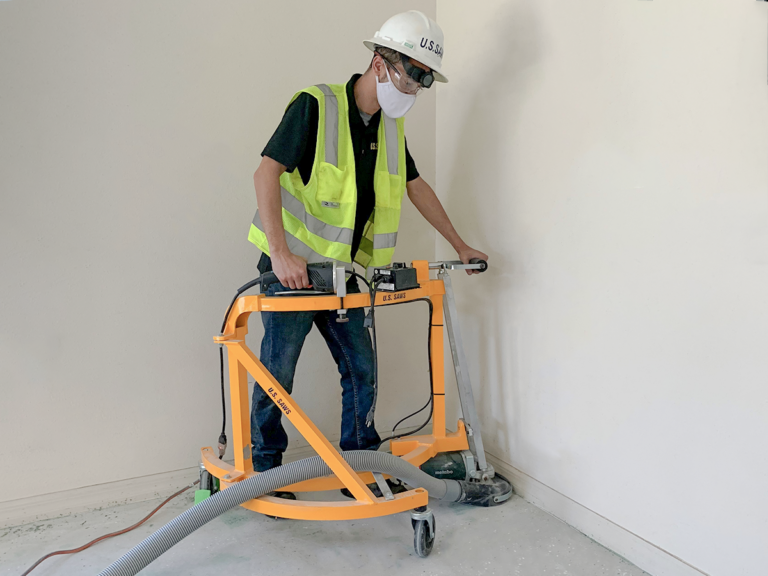
The TC-7 was built to solve that problem. It is a stand-up concrete edge grinder that keeps the operator upright and comfortable while delivering the feel and precision of a handheld grinder.
In this blog, we explore what makes the TC-7 concrete edge grinder different and where it fits on the job. You will learn how the stand-up design protects your crew from fatigue and injury, how the on-the-fly pitch and side-to-side controls give it the feel of a handheld grinder, how the Generation 2 dust shroud keeps the work area clean, and how one concrete edge grinder can switch between aggressive grinding, fine polishing, and coating removal.
Why Concrete Edge Grinding Punishes Crews
The cost of hand grinding is not just slow production. It is the physical toll. Kneeling, bending, and reaching for hours forces crews to stop often to stretch, hydrate, and recover.
Every one of those breaks is time the floor is not getting ground. A handheld grinder might be fast in short bursts, but those bursts get shorter as the day goes on. By mid-afternoon the same edge that took one pass in the morning can take two.
Our customers tell us the biggest gains from the TC-7 are not just speed, they are consistency. Hand grinding might be quick in short bursts, but it is physically punishing, and crews naturally take frequent breaks to stretch, hydrate, and recover before getting back down on their knees. That downtime adds up fast. With the TC-7, operators stay comfortable and stay working, so the machine runs all day instead of in stops and starts. One contractor told us his crew actually competes over who gets to run it, and he is already planning to buy a second unit.
Dave Glynn, VP of Surface Prep Sales, U.S. Saws
How a Stand-Up Edge Grinder Changes the Job
The U-shaped frame is the heart of the design. It lets the operator stand upright and stay close to the tool, with no reaching out over a frame to get to the controls. That upright stance is more comfortable, more intuitive, and gives a far better feel for what the grinder is doing on the floor. Instead of fighting fatigue, the operator stays in a natural working position and keeps moving.
Total Control, Not Just Convenience
A rear pitch-adjustment lever and a front side-to-side handle let the operator change pressure instantly while grinding. That is what on-the-fly adjustment means on the job: you keep consistent contact with the floor without stopping or wrestling the machine. The TC-7 feels like a hand grinder because the design feeds operator feedback directly from the cup wheel and the surface it is grinding. Solid tie-rods connected to ball joints on a unique grinder mounting bracket make that possible. No other machine on the market has matched it. This is real engineering, not marketing.
Built for Tough Job Sites
The whole machine is built to take abuse. A durable aluminum chassis keeps the weight manageable, heavy-duty casters roll over cords and debris instead of catching on them, and a shock-absorbing grip protects the operator. Solid components sit on an easy-to-maintain platform, so the TC-7 holds up to daily job-site punishment.
Power Behind the Concrete Edge Grinder
The TC-7 runs on the proven Metabo W24-230, a 15-amp grinder that delivers 6,600 RPM with plenty of power. That grinder has been the industry standard for more than thirty years. To make the stand-up design feel familiar, the handle was separated from the grinder body and moved to the top of the frame, so the operator gets the same trigger and lock as the handheld version. The result is a concrete edge grinder that feels like a tool the crew already knows.
Generation 2 Dust Shroud for Cleaner Edge Grinding
The Generation 2 dust shroud is made from a proprietary polyurethane. It is hard enough to resist wear but soft enough to flex over imperfections in the floor. The front edge flips up to expose just enough of the cup wheel to get tight against the wall, while still sealing between the shroud and the wall to capture dust. The hose port sits low to the ground and connects to a standard dust extraction vacuum, so the operator is not dragging the weight of the hose around. The hose lays flat and follows the machine, which matters because concrete edge grinding happens in small, rapid movements. A cleaner work area supports crew health and helps you stay within OSHA’s respirable crystalline silica standard on the site.
More Than Edges: Where the Concrete Edge Grinder Shines
The TC-7 is built for small rooms, garages, kitchens, bathrooms, and anywhere a large planetary grinder cannot fit. It is especially useful for polishing, where the same edges often have to be run multiple times. On long straight runs in a standing position, each pass gets faster because the operator is not fighting fatigue. It also handles long straight edges on larger jobs with ease.
Edge Grinding and Polishing Versatility
The TC-7 runs 7-inch cup wheels, ceramics like the Boride EZ Edge pads, and ZEC wheels, and it switches to polishing pads with an optional variable speed controller. The controller is an add-on that can be installed later or removed easily when it is not needed. It plugs in directly and takes the grinder from 0 to 5,000 RPM, with the middle range ideal for polishing pads: fast enough to get the work done, slow enough to keep the pads from overheating. Unplug the controller and the TC-7 is a surface prep production monster. Fit a PCD cup wheel and it becomes a very efficient coating removal machine.
We had a customer with carpet glue that needed to come off a floor. It was about ten years old, the carpet was gone, but the glue was still a little tacky. Cup wheels were just smearing it and gumming up. We recommended the 7-inch PCD 6-segment cup wheel. The small quarter-round segments scrape away coatings and contaminants like glue instead of grinding through them. The PCD removed about 98 percent of the sticky glue, and a standard 24-segment turbo cup wheel cleaned up the rest and prepped the surface for new epoxy.
Amir Omry, Sales and Technical Support, U.S. Saws
Why Other Stand-Up Edgers Have Fallen Short
Over the years several companies have tried to build a stand-up edger, and all of them fell short. Contractors who tried those machines usually ended up disappointed and right back on their hands and knees. The TC-7 is different. It is the work of three engineers with more than thirty years in the flooring industry, the same people who invented the dust shroud, the joint cleanout saw, and the crack chaser. They understood exactly why the earlier designs failed. The TC-7 was built from real-world experience, not a grinder bolted to a rickety contraption, and it shows. If you are tired of sore knees, bad edges, and slow production, the TC-7 delivers results nothing else on the market comes close to.
Concrete Edge Grinder FAQ
What size cup wheels does the TC-7 use?
It runs 7-inch cup wheels, including ceramics, ZEC wheels, and PCD cup wheels for coating removal.
Can the TC-7 polish as well as grind?
Yes. With the optional variable speed controller it runs polishing pads from 0 to 5,000 RPM, with the middle range ideal for polishing without overheating the pads.
What motor powers the TC-7?
The Metabo W24-230, a 15-amp grinder rated at 6,600 RPM that has been an industry standard for more than thirty years.
Where does a stand-up edge grinder make the biggest difference?
Tight spaces like garages, kitchens, and bathrooms where a planetary grinder will not fit, plus any polishing or long straight-run work where repeated passes wear crews out.