Top 5 Must Have Tools for an Underground Contractor

As an underground contractor, you know your role in installing and repairing various pipes and cables is vital to an area’s infrastructure. Getting the job done swiftly, efficiently, and correctly is mandatory. In order to get the job done, you need to ensure you have the best underground tools on hand to finish the project. The top five tools for any underground contractor’s toolbox are:

  1. An air-powered belly saw;
  2. A chainsaw;
  3. A cordless pipe beveller;
  4. A battery-powered valve exerciser; and
  5. A manhole cover lifter.


Without these tools, an underground contractor’s job becomes a lot harder. Let’s take a closer look at each of these underground tools.

What Is a Belly Saw and How Does it Help?

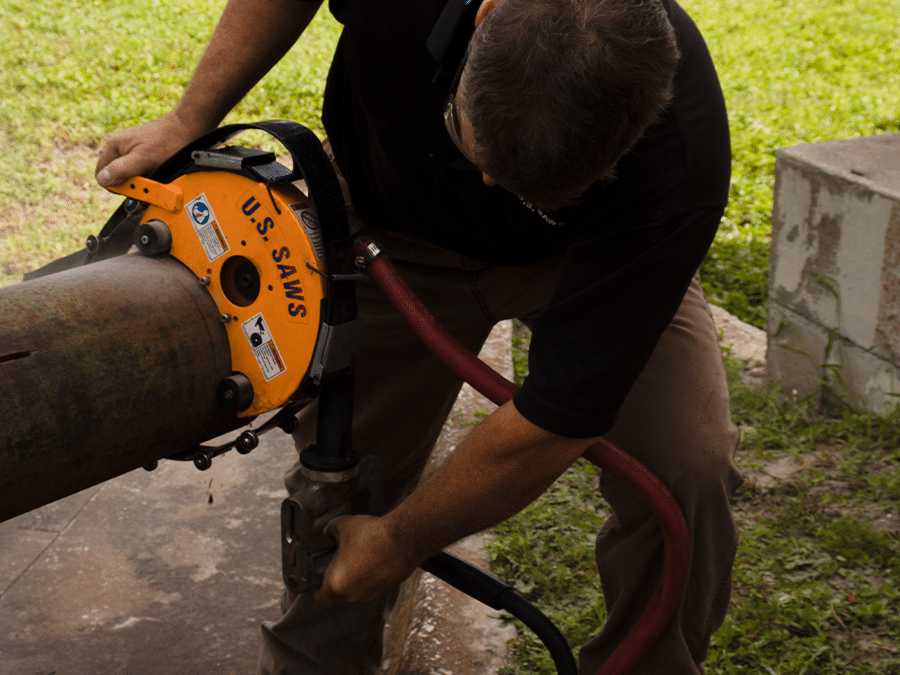
One underground tool that makes the job easier for underground contractors is the air-powered belly saw. These air-powered belly saws are a great option for contractors who need to cut underground pipes.  Belly saws are designed for easy and safe operation in tight spaces.  At U.S.SAWS, their belly saws are equipped with Tiger Tooth blades that remain shielded by a clamshell cover until it is time to cut, protecting the user from accidents.  The saws work by attaching the saw to the pipe itself using the saw’s strap.  The blade is then guided by four spring-loaded wheels to ensure a straight and accurate cut every time. Air-powered belly saws are a great underground tool that will allow you to cut through just about any material, including PVC, HDPE, ductile iron, cast iron.  Since these saws are air or hydraulically operated, they not only add the benefit of being exhaust-free, but also are operable in wet conditions. These saws can handle pipes with diameters up to 24 inches and only require 7 inches of clearance.

Chainsaws Built for Pipe Cutting

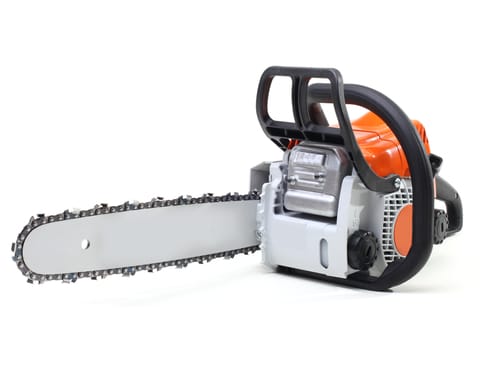
Air-powered chainsaws are versatile underground tools. There is one for every job.  They are safer than gas-powered or electric chainsaws, especially in wet or tight spaces. If you are looking to cut pipe for a demanding job with minimal excavation, an air-powered chainsaw may be the answer for you. These chainsaws come equipped with a pipe clamp to ensure no operator fatigue comes into play with little to no kickback. This pipe claim also allows for safe bottom-up cuts.  U.S.SAWS utilizes a PowerGrit chain that can be used to cut ductile iron, HDPE, PVC, cast iron, and the like. They also come with a concrete chain for concrete pipe, reinforced concrete, and concrete structures.  Square corners may be cut without overlapping cuts. Also, these chainsaws can cut irregular shapes, making them more adaptable to your needs than the belly saw.

The Cordless Pipe Beveller

A cordless pipe beveller is another must-have underground tool for an underground contractor. This handy item is a quick, easy, and safe way to cut and bevel any plastic pipe. For contractors working with sewer pipes, the cordless pipe bellever is an all-in-one solution. Its small size and battery operation allow it to make easy work of cuts and beveled edges in tight spaces without being tethered to an electrical cord.  The cordless pipe beveller is adjustable for all sizes of pipe and is a lightweight solution for work in trenches.   Some retailers, like U.S. Saws, offer reasonably priced cordless pipe bevellers that come equipped with a quality DeWalt 20V grinder, 16 flute beveller, two batteries, a charger, and a carrying case.

Battery Powered Valve Exerciser

Valve exercisers are a must-have tool for contractors working with waste and water facilities or municipal water departments.  The key to working with waste and water departments is being able to access the worksite and regulate the flow of water, and the valve exerciser is the way to do it.  The advent of the battery-operated valve exerciser made the process of opening and closing valves easier on the workers, making access to difficult locations easier with less manual labor.  The U.S.SAWS VEX-400 is a perfect example of a solid, portable valve exerciser with the power and safety features needed for successful valve work.  These exercisers are made of alloy aluminum and hardened steel which use a Metabo drill motor as their power source.  Safety features include a trigger handguard, stable foot base, overload protection, and a shear key that will break before the gearbox, preserving the integrity of the exerciser and its user.  This device has a rotation counter that tracks turns rotating in either direction, comes with three batteries for a full day’s work without the need for recharging, and has multiple extensions allowing the user access to a wide range of valve depths.  This powerful tool also has variable torque settings ranging up to 400 peak ft/lbs.  After use, it breaks down for easy transport in its carrying case.

Manhole Cover Lifter

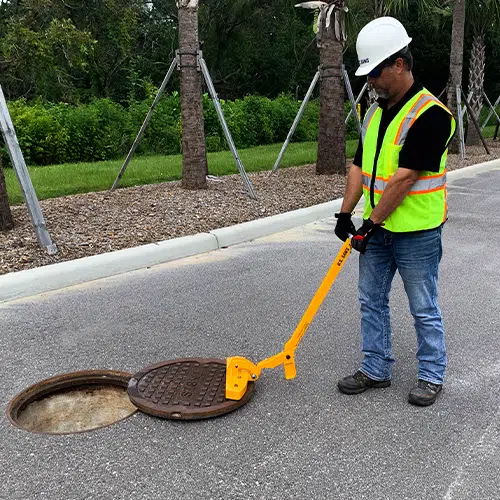
The fifth and final must-have underground tool is the manhole cover lifter.  Most underground contractors, whether they are dealing with electricity, gas, telephone, waste removal, or water will come face to face with a manhole cover on the job.  Manhole covers have been known to weigh hundreds of pounds and can prove to be a real obstacle for workers.  There are many varying sizes and weights of manhole covers and companies like U.S.SAWS provide access to a variety of tools to meet any underground contractor’s manhole cover lifting needs. Magnetic manhole cover lifters are the most popular and take some of the risk of physical injury out of the removal of manhole covers. The U.S.SAWS ROBOTRON Utility 4 Magnet Break N’ Take is a handheld magnetic cover lifter that makes easy work manhole covers up to 325 pounds.  This underground tool utilizes neodymium magnets, which are among the strongest magnets in the world.  Heavy lifting jobs may require a Supreme Duty Collapsible Dolly with 10” hard wheels and a mega duty magnet will get the job done.  This lifting system can handle covers up to 900 pounds.  This heavy-duty manhole cover lifter keeps the operator at a safe distance while lifting, can fold down for easy transport, allows for two lift positions, and is compact and lightweight.  There are even manhole cover lifters with barriers for the protection of the worker and the general public.

Contact U.S.SAWS today to discuss updating your underground toolbox!
The 5 Best Tools for a Concrete Surface Prep Contractor

Concrete flooring is a rapidly growing trend for business owners and homeowners.  When prepped properly, concrete can be an inexpensive solution for beautiful and durable flooring.  However, much like any material, concrete flooring needs to be repaired and sometimes replaced.   Prior to any repair work or replacement that concrete surface will need to be prepped for the project with the proper concrete saw and other handy items.

The five best tools for a concrete surface prep contractor’s tool box are:

  1. A concrete grinder;
  2. A joint clean out saw;
  3. A dual component polymer pump;
  4. A gas powered dust collector; and
  5. An early entry saw

Let’s take a look at the benefits of each of these tools.

The Most Innovative Concrete Grinder on the Market

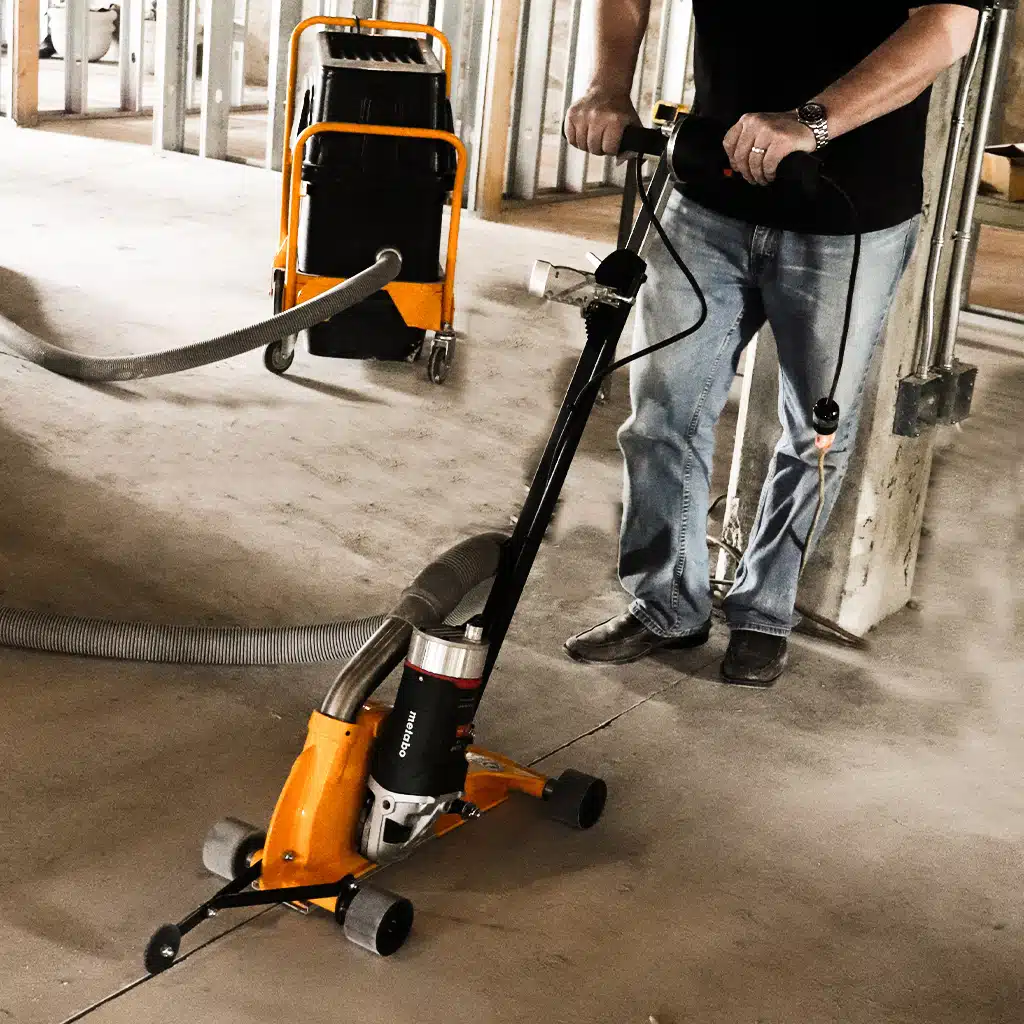
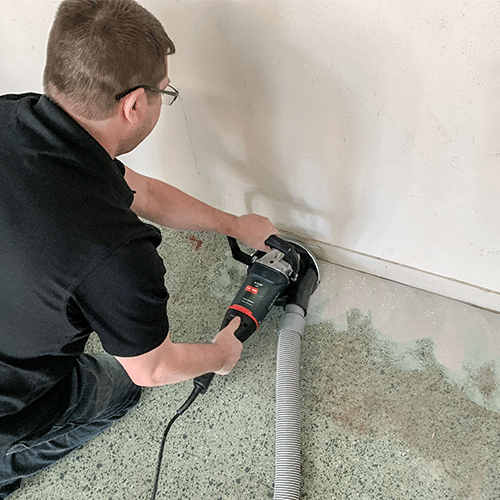
Every concrete surface prep contractor needs a concrete grinder to remove all of the inconsistencies and flaws in a concrete surface and provide a smooth and usable floor.  Even old concrete floors can be ground down and polished to a renewed perfection.   Long over are those days of back breaking handheld concrete grinders.  Modern technology has devised ways to create powerful grinders while also allowing the user to remain in an upright position.  The TC-7 Stand-Up Edge Grinder, available through U.S.SAWS, is the most innovative concrete grinder on the market.  This powerful machine will not only grind down high and uneven spots in the concrete but also functions as a polisher for concrete surfaces.  The TC-7 gives the operator total control, allowing for the front, back, and side to side adjustments, an adjustable outrigger wheel for various head pressure, a durable aluminum chassis, and a U-shaped frame allowing the operator to remain in a standing position, all with a shock-absorbing grip.

Joint Clean Out Saw

When resurfacing concrete, a joint clean-out saw is a concrete saw must for any surface prep contractor.  Concrete joints are widely used to control cracking in concrete slabs due to expansion and contraction of the concrete. The joints are placed in predetermined locations and are usually at a depth of ¼ of the thickness of the concrete slab.  When it’s time to resurface the concrete, these joints need to be cleaned out in order to properly grind and polish the concrete.  U.S.SAWS Mark-III Joint Clean-Out Saw is the tool for that job. This precision saw is designed to clean out the joints between the slabs, remove whatever filler was used, and make accurate cuts up to two inches deep.  This concrete saw makes accurate cuts by allowing the operator to see the blade, even though 98% of the blade is covered for dust control purposes.  You’re now able to see the blade but without a cloud of dust!  This saw blade is also adjustable and has a depth lock to prevent overcutting.

Easy to Use and Inexpensive to Maintain Dual Component Polymer Pump

Now that you know the must-have tool for cleaning out a concrete joint, we need to find the best tool for applying the new concrete filler into the freshly carved joints.  Dual component polymer pumps are the easiest tool for the job.  The dual-component system allows you to mix and dispense the polymer filler into the joints through the use of one device.  U.S.SAWS’ Dual Component Polymer Pump is an easy to use and economical option for surface prep contractors.  This polymer pump comes standard with a 1:1 component ratio, but also has a 2:1 component ratio available.  The aluminum mixing manifold is easy to clean.  The Dual Component Polymer Pump has two 6.5 gallon semi-transparent tanks that allow the contractor to keep easy tabs on material levels. If dispensing is a concern, this model’s dispensing wand has variable speed control and start/stop control allowing precise fill for each joint.  While this machine is not designed for single component polyurethates, it goes above and beyond for polyuria, polyaspartic and epoxy materials.

Gas Powered Dust Collector

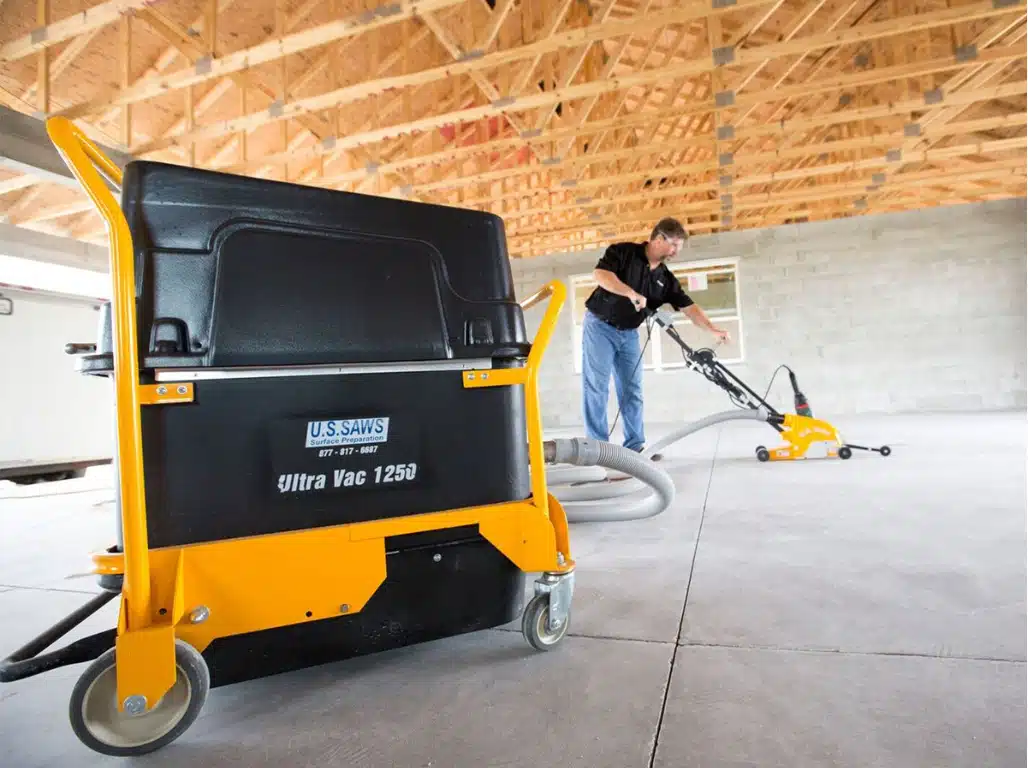
Dust is inevitable with any concrete surface prep job.  While many of the above-listed tools have unique ways to minimize dust and maximize the operator’s vision, dust is still a factor that contractors have to handle not only for cleanliness on the job site, but also for health purposes.  Concrete dust is very fine and has the potential to make people sick if inhaled.  A gas-powered dust collector can make short work of the residue left behind from your concrete saw and has the power to remove those fine particles of concrete dust.  These dust collectors are not your run-of-the-mill home vacuum.  These are heavy-duty industrial vacuums equipped with high-power gas engines to clear out any leftover residue.   Gas-powered dust collectors are great for masonry and block saws as well as concrete.  The Ultra Vac 1250 – Gas Dust Collector is a great option for anyone using a concrete saw.  This vacuum system is constructed with all-steel tube framing and a polyethylene body that can take significant abuse.  Powered by a Honda GX240 gas engine, it has a 12.5 gallon dust bin for those large projects and a 25 foot hose with a 3 inch diameter.  The front also has front and rear handles for easy handling. Options for his dust collector include HEPA filters and Longopac bagging systems.

Early Entry Saw

An early entry saw is a fine concrete saw to have for creating contraction joints in fresh concrete.  Early entry saws can cut into fresh concrete within 1 to 4 hours of finishing.  Having a properly cut joint is crucial to the quality of the concrete slab.  A poorly carved joint will not provide the proper plane needed to guide the stress crack.  The SRX-2000 Early Entry Saw by U.S.SAWS is an essential concrete saw for a prep surfacer’s toolbox.  This concrete saw allows for the sawing of crack control joints within one to two hours of concrete finishing.  Four-inch wide polyurethane wheels allow the saw to move across the freshly finished concrete without marking the surface.  Joint chipping and spalling are minimized via the skid plate.  The blade guard on this early entry saw is equipped with a vacuum port that controls dust while dry cutting the concrete.  The maximum cut depth for this saw is 1 and 5/8 inches and comes with an easy release depth control lever.  The folding handlebar compacts this concrete saw down for easy storage.

Contact U.S.SAWS today to discuss your concrete surface prop tool options!

How Tight Should a Chain Saw Be?

Knowing how tight a chain saw chain should be is essential for both performance and personal safety. Great equipment is only effective when it’s used and maintained properly, and your chain saw is no exception.

All chains are susceptible to stretching and sagging over time, and the amount of stretch depends on the type of chain saw and the material you’re cutting. Tension that is too loose or too tight brings its own risks. To avoid problems, check your chain saw before starting a project and a few times during operation to make sure it’s operating optimally.

How to Tell if Your Chain Saw Has the Proper Tension?

As with most maintenance, your chain saw requires balance. The right chain tension depends on the job. Concrete cutting and ductile iron cutting chain saws typically run with a slightly looser tension than wood cutting models.

General rule: The chain saw chain should sit snugly along the guide bar with a little slack. The bar links should lift slightly when pulled but remain engaged in the bar nose and groove.

Testing the tension is simple:

  • Pull test: Gently pull the chain away from the guide bar to see if the links remain engaged. They will want to lift up slightly, but not enough to become dislodged from the guide bar.
  • Rotation test: With gloves, rotate the chain around the guide bar by hand. A properly tensioned chain moves smoothly with little force.

If the chain sags or can come off the bar, tighten it before use according to your manufacturer’s owner manual. You also need to ensure the chain is not too tight. If there is no give to the chain when you pull up slightly, and it sits rigidly along the guide bar, the tension needs to be adjusted to loosen it up before use. In this instance, you should also consult the manufacturer’s manual to ensure you are properly tightening the chain. Always follow the manual for model‑specific steps.

The Danger of Running a Chain Saw with the Wrong Tension

Monitoring the tension of the chain is critical to extend the life of your chain saw, improve cutting performance, and protect your safety. Incorrect tension shortens the life of your chain saw and increases the risk of accidents. Understanding the consequences of incorrect tension is as important as knowing how to adjust it. Whether the chain is too loose or too tight, improper tension can lead to safety hazards, costly repairs, and poor cutting results.

Risks of a loose chain:

  • Loose chains can cause warps in the guide bar, which then may lead to a string of other rapidly worn parts.
  • If the chain is too loose, you run the risk of higher risk of chain derailment (chain coming off the bar), which can cause severe injury, which may cause severe injury to the user, including a loss of limbs or digits or even a severe cut to the face.
  • Kickback is also a serious issue with loosely tensioned chain saw chains which can cause severe injuries.

Risks of an overtight chain:

  • Excessive tension can strain the clutch, bearings, and motor, all of which are vital to operating the chain saw
  • Chains that are too tight may cause the chain saw to heat up, which is damaging to other components and may even create a fire hazard.
  • An overtight chain can cause a shorter lifespan for the chain and guide bar

How to Adjust Chain Saw Chain Tension

Each chain saw from U.S.SAWS comes complete with a manual that outlines the proper method to test and adjust chain saw chain tension and to properly maintain your chain saw to ensure the longevity and safety of your tool.

The tips presented below are general instructions only and not meant to replace your particular owner manual instructions.

    1. Always turn the saw off and tension the chain only when it’s cool. Wear gloves and follow the manufacturer’s safety guidance.
    2. Locate the adjustment points. These are typically on the side cover or the front of the saw near the guide bar. Some models have a built‑in adjustment in a side cover release knob.
    3. Loosen the guide bar nuts so the bar can move during adjustment.
    4. Turn the tension screw clockwise to tighten or counterclockwise to loosen. Hold the bar nose up while adjusting and keep it raised until the nuts are re‑tightened.
    5. Adjust for bar type:
      • Sprocket-nose bars: After standard adjustment, give the tensioner an additional quarter to half turn so the lowest tie straps and cutters contact the bar rail firmly.
      • Solid-nose bars: Stop when the drive links are fully seated and all tie straps lightly touch the guide bar.
    1. Check the fit. There should be a small gap under the chain, and it should move freely yet feel snug.
    2. Test the tension:
      • Rotation test: Pull the chain along the top of the bar toward the nose. It should move smoothly with light resistance.
      • Snap test: Pull the chain down on the underside of the bar so one or two drive links lift out of the groove, then release. The chain should snap back into place immediately.

Keep Your Chain Saw in Peak Condition

Knowing how tight a chain saw chain should be and maintaining proper chain tension is only one part of keeping your chain saw performing safely and efficiently. Long-term care of your chainsaw ensures your equipment lasts longer, cuts cleaner, and stays safer to use.

When you understand how tight a chainsaw chain should be and treat tension checks as part of a broader maintenance plan, you’ll protect both your investment and your safety. Over time, these simple habits will help you avoid costly repairs, extend your chain’s lifespan, and ensure every cut is as smooth and efficient as the first

How to Lift a Manhole Cover

Manholes play a vital role in the maintenance of your area’s infrastructure, and their concepts date back to Roman civilization. Many of our everyday utility needs—including electricity, gas, telephone, waste removal, and water—run underground through wires, pipes, drains, and sewers. Manholes provide access to these systems, but they are sealed with heavy covers that require proper tools to remove. Knowing how to lift a manhole cover safely is essential for both efficiency and injury prevention.
Manhole covers serve four key purposes. First, they allow fast inspections of storm drains and sewers, as well as maintenance and blockage removal. Second, they help ventilate sewer gases, preventing dangerous buildup. Third, they provide access for reconfiguring sewer systems, such as joining systems or changing flow direction. Finally, they allow for consistent installation of sewer lines.

Cast Iron Manhole Covers: History and Challenges

Manhole covers are a crucial part of the system, protecting both the public and the underground utilities. Historically, these covers were made of cast iron, chosen for its strength, economy, and durability. Cast iron manhole covers have been in use for centuries, with many older versions featuring unique patterns and city-specific designs that also provided grip for pedestrians and vehicles.

The heavy weight of cast iron—often more than 250 pounds—ensures the cover stays in place as heavy traffic passes overhead. While this weight is an important safety feature, it has also created challenges. Utility workers have long struggled with the strain of lifting heavy covers, and rushing the job without the right tools has led to injuries ranging from back strain to crushed fingers. Today, even as composite and ductile iron alternatives gain traction, cast iron covers remain widespread, making safe lifting practices essential.

Using a Manhole Cover Lifter

Manhole cover lifters are designed to reduce the strain and risk of injuries associated with moving heavy lids. Cast iron covers, and even concrete or recessed covers, can be extremely difficult to remove—especially if they have become wedged or stuck over time.

Workers sometimes ask how to lift a manhole cover by hand or without tools. The reality is that lifting by hand is unsafe and not recommended. The safest approach is always to use the right manhole lifting tool.

There are several lifter styles available. Manhole cover hooks, sometimes called keys, are a practical solution for smaller or lighter covers and come in a variety of sizes to fit different lifting slots. These tools are straightforward but still require proper lifting technique to avoid injury. Magnetic manhole cover lifters take much of the strain out of the job, reducing the risk of back and hand injuries. They are available in different strengths and configurations, with some models including scrapers or hammers to help dislodge stubborn covers. For flush or recessed lids, specialized lifters are designed to provide grip without damaging the surrounding surface.

Tips for safe lifting of a manhole cover:

  • Clear dirt and debris from around the cover and any lifting slots.
  • Position the correct lifter (hook, magnetic, or recessed cover tool).
  • Apply steady leverage rather than brute force.
  • Always work in pairs for heavier covers.
  • Avoid rolling covers into active work areas or traffic lanes.

If you’ve ever struggled with how to lift a stuck manhole cover, magnetic lifters are often the most efficient and safest solution.

U.S.SAWS Manhole Lifter Solutions

U.S.SAWS has developed a range of manhole cover lifters designed to meet the needs of utility crews and contractors. The Megatron 5 Magnet Break N’ Take is a handheld magnetic lifter that makes easy work of covers weighing up to 350 pounds. Built with neodymium magnets—among the strongest available—it provides a reliable grip and helps operators avoid unnecessary strain.

For heavier lifting jobs, the Supreme Duty Collapsible Dolly with 10” hard wheels and a mega-duty magnet can handle covers weighing up to 900 pounds. This system not only keeps operators at a safe distance during lifting but also folds down for easy transport and offers two lift positions for flexibility. Despite its strength, the dolly is compact and lightweight, making it practical for field use.

U.S.SAWS also offers accessories that enhance both safety and efficiency. The orange 42” Manhole Barrier provides visibility and protection for workers and the public during lifting operations, while the Twin Magnet Spreader Bar adds stability and increases lifting force for large or uneven lids. With these solutions, workers no longer need to wonder how to lift a concrete manhole cover or how to lift a recessed manhole cover—U.S.SAWS provides purpose-built tools to make the job faster, safer, and more efficient.

Manhole Covers – Final Thoughts

Manhole covers are essential for protecting public safety and underground utilities, but their weight can present hazards. By using the right tools, workers can lift even the heaviest or most stubborn covers safely and efficiently.

Contact U.S.SAWS today to learn more about our range of magnetic manhole cover lifters, hooks, and accessories designed to make manhole maintenance faster, safer, and easier.

The Trick to Cutting Concrete is Choosing the Right Saw

When it comes to concrete construction jobs, choosing the right concrete cutting saw is key to getting the job done right. Whether that job calls for cutting out windows and doorways, cutting through floor slabs and walls, cleaning out or replacing control joints, drilling perfectly round holes or even cutting straight lines and decorative designs into concrete, there’s a concrete cutting tool specifically designed to get the job done.

Walk-Behind Concrete Saws

Operated much like a lawnmower, walk-behind concrete saws are generally used for sidewalks, driveways, basement and warehouse flooring and even asphalt. They offer much higher horsepower and faster cutting than their handheld counterparts, with blade sizes ranging anywhere between 14 to 32 inches, like this heavy-duty walk-behind air saw featuring 20 inches of blade capacity.

You’ll also find a few different types of walk-behind concrete saws, including early-entry, joint clean-out and crack-chasing saws. Early-entry concrete saws are designed to be much lighter than conventional sawing equipment so they can be used on younger concrete, often as early as the concrete has set.

For jobs that call for cleaning out control joints or routing out cracks, opt for a joint clean-out or a crack-chasing saw. Join clean-out saws are designed for cleaning out existing joints, preparing new joints or removing deteriorating joint material, and can also be used for removing epoxy, polyurea and polyurethane joint filling material. Crack-chasing saws, like the CC-100 model from U.S.SAWS, are ideal for jobs that require routing out random cracks in concrete or asphalt surfaces prior to filling with sealant.

Handheld Concrete Saws

As the name suggests, handheld saws are operated by hand, making them more lightweight and portable than walk-behind saws. They are often best used for smaller jobs, like cutting wall openings, or for quick cuts that don’t require a certain level of accuracy. Handheld concrete saws are further categorized into two different types: chainsaws and hand saws.

Concrete Chainsaws

When it comes to making plunge-cuts for creating joints, cutting out windows and doorways and cutting through floor slabs and walls, the concrete chainsaw is a major contender. Designed to be used just like a wood-cutting chainsaw, these handheld saws use specially designed chains for cutting through concrete, including standard concrete chains used for dry-sawing, like the TwinMAX-32 Plus from U.S.Saws, and diamond chains used for wet-sawing, like the 20″ ProForce Concrete Diamond Chain. In terms of power options, you’ll find plenty to choose from, including heavy-duty gas-powered models like this beauty or like this beauty and air-powered chainsaws like this model by U.S.SAWS.

Concrete Hand Saws

Also known as cut-off saws, concrete hand saws are often the go-to tool for most concrete cutting jobs. Available in gas, hydraulic, electric and air-powered models, concrete hand saws are preferred for their speed, portability and accessibility. Air-powered hand saws, like this model from U.S.SAWS, serve as an environmentally-friendly and safe alternative to their gas-powered counterparts but also deliver less power. For jobs that require exceptional power, a gas-powered concrete hand saw is the way to go, like this Husqvarna K1260-14 7.8hp Saw featuring an impressive 7.8 hp output and 14-inch blade guard.

Types of Concrete Saw Blades

In addition to choosing the right saw for the job, another trick to concrete cutting is choosing the right blade for the job. Just chainsaws, concrete hand saws can be used for both dry-sawing and wet-sawing, and each method requires a specific type of blade.

Designed to prevent overheating during dry-cutting. abrasive blades are commonly used for jobs requiring shallow, intermittent cutting and are the preferred choice for indoor jobs due to easy cleanup. However, they also reduce in size with continued use, making them better suited for smaller jobs.

Unlike abrasive blades, diamond blades do not reduce in size with continuous usage, making them ideal for bigger jobs but prone to overheating and unsuitable for dry-sawing. Best used for wet-sawing, diamond blades feature layered segments of diamond particles that drop off with each use to reveal a fresh row of particles until the blade is ready to be replaced. They’re often preferred for their precise cutting abilities, durability and minimal dust production with the wet-sawing technique, but also require more clean-up due to the sludge-like mixture accumulated by dust and water.

More Concrete Cutting Tools

Some concrete cutting jobs require a tool with a specific set of skills. For example, a concrete hand saw could be an option for cutting straight lines or etching designs into concrete, but would also require extremely steady hands and a high level of accuracy. And when it comes to cutting perfectly round holes into concrete, none of the aforementioned concrete saws are fit for the job. This is where core drillers and decorative concrete saws come in.

Concrete Core Drillers

When the job calls for running cable lines, HVAC ducting and sprinkler systems through concrete structures, a concrete core driller is the best tool for the job. Specifically designed to cleanly drill holes into concrete, these handy tools come in a few different options, including electric-powered models like this high precision drilling machine from U.S.SAWS, and cordless models like the Cordless Core EZ Kit, complete with batteries, a battery charger, a gearbox and wheeled case for easy portability.

More on Concrete Construction Tools

Concrete cutting saws aren’t the only tools to consider when planning a construction job. When it comes to grinding down uneven concrete slabs, leveling out joints, removing stubborn glue, smoothing and polishing surfaces, or even cleaning industrial contaminants, a concrete grinder is another solid investment. Learn more in our guide to choosing the right concrete grinder.

STAY SHARP!


Sign up to receive the latest info on new U.S.SAWS products, special offers and more. Enter your information below to subscribe to our email list.

© 2026 U.S.Saws All Rights Reserved. Website Designed And Developed By Power On Marketing

[]