Diamonds Are a Contractor’s Best Friend

We aren’t talking about the jewelry or even the precious stones extracted from the Earth.  A contractor’s favorite diamond is a synthetic diamond, man-made and created in a lab, where natural processes are mimicked to create a diamond.  Synthetic diamonds match the hardness of natural diamonds but are more readily available.  As the process of creating synthetic diamonds may become expensive, synthetic diamonds are typically used as grit or small crystals and a wide variety of industrial equipment.

Diamond Blades/Grinders/Chains

Diamond saw blades are equipped with small diamond crystals that are attached as grit to the saw blade itself.  This grit provides superior grinding action that works in conjunction with the standard cutting action of the saw blade. The result of this mix of grinding and cutting provides an efficient and precise cut.  Diamond saw blades are excellent for use in cutting concrete, brick, and tile.  Diamond blades vary in size and grit.  Because of this, it is important to understand the type of job the diamond blade is working to complete.  Having the right size blade and the proper mesh grit on the saw blade will ensure your job is completed properly.  Larger blades used with walk-behind saws make quick work of concrete while a smaller saw with a medium-mesh is perfect for glass and porcelain.

Diamond grinders work essentially the same way as diamond blades, however instead of cutting materials, they grind them to create smooth surfaces that can be polished and sealed or even painted. In large concrete finishing jobs, diamond grinders work well to smooth out divots and pits prior to sealing and painting.  Large jobs that require significant grinding in order to achieve a smooth finish require a grinder with a large mesh, or larger diamond bits.  Smaller surfaces that need a more polished finish are better off with a small, tightly knit grit to achieve the high sheen.

Chainsaws also come with diamond tool options.  While the diamond chains naturally cut with better precision through multiple mediums, perhaps the greatest advantage of diamond chains lies in their protection of the user.  Chainsaws are notoriously dangerous.  Protective gear is required for their use, from goggles to steel toed boots and thick gloves.  One of the greatest dangers of chainsaws is kickback.  Kickback is when there is an unexpected upward turn of the guide bar of the chainsaw.  This happens when the nose of the chainsaw hints and objects and the chain snags.  Because of the way diamond chains both grind and saw, kickback proves to be a non-issue, making them much safer to operate than a chainsaw with a standard chain.

Polishing Pads

Another great diamond tool for any contractor’s toolbox is the diamond polishing pad.  This tool also works on multiple mediums to polish out scratches and refine marble, granite or concrete into a smooth and refined finish.  These pads, much like any other tool, come in a variety of sizes and grit to help you achieve that desirable smooth surface.  The sizing of the pad is equally as important as the grit.  The pads need to remain flat as they are being used in order to provide equal polishing to the pull surface.  Pads that are too large for a space are not able to remain flat and will cause uneven cuts in the surface you are working so hard to smooth.  Polishing pads also come in wet and dry varieties.  Wet pads are useful as the water reduces friction, thereby reducing heat, which helps with the longevity of the pad.  Wet pads typically provide a better finish as well.  However, they are messy.  Jobs that must be completed under strict time constraints may benefit from a dry pad as the cleanup is less time consuming.  U.S. Saws has a wide variety of diamond polishing pads to help with any granite, marble or concrete job.

Dust Shrouds:  The Diamond Tool’s Cleaner

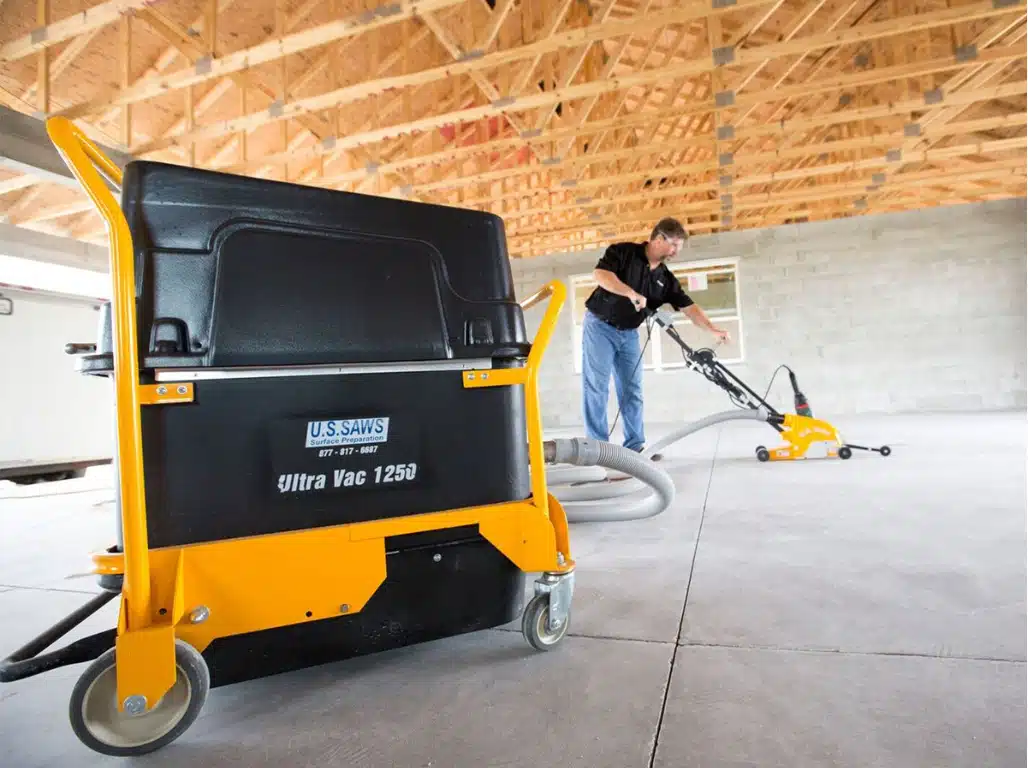
Concrete cutting, sawing, grinding and polishing, while working to create a perfect structure, is a dirty, and hazardous job.  The dust caused by grinding materials like concrete has been known to make construction workers very sick.  The tiny silica particulates that are released may be inhaled and cause infections in the lungs.  these particulates have also been known to cause cancer.  it is vital to construction workers health that they use protection to keep the dust out of their lungs.  One such way to reduce the amount of dust released into the air is through a dust shroud.

The dust shroud was invented in 1989 by Bill Glynn and Warren Duncan as a way to remove hazardous dust that was created during the grinding process of concrete.  the initial prototype was created by Glenn using his son’s basketball, which she would she cut in half.  A hole is inserted on top to fit the grinder, and a vacuum was attached to suck away the dust.  Modern grinders are essentially the same but with big enhancements.  for instance, The US SAWS 5-inch Pro Dust Shroud is equipped with polyurethane construction and aluminum mounting which aids in protecting the grinder from excessive heat.  one obstacle with using a the shroud is being able to get close to a wall with your grinder.  This model is equipped with a convertible front edge that can go up or down to allow the user to get as close to the wall as possible.  U.S. Saws has been manufacturing dust shrouds since 1993, only four years after the initial prototype was created.  They remain a leader in the dust shroud industry due to their use of premium materials in their products and their wide variety of dust shroud offerings for all ranges of handheld and stand up grinders.

Contact U.S. Saws today to speak with a professional about which diamond tools every contractor needs in their toolbox.
Choosing the Right Diamond Blade

Diamonds are one of the hardest substances on earth, and while they can be buffed and polished into brilliant gems that adorn the crowns of royalty and the necks of celebrities, they are also a very handy medium for tools.  Scoring a 10 for hardness on the Moh’s scale, diamonds are renowned for their beauty and durability, and diamond blades are no different.  While not made of the stunning gemstone found on the fingers of the wealthy, a diamond blade will certainly evoke that same sense of awe in the eyes of the construction worker when viewed in action. Diamond blades are efficient and cut with precision.  Two essential characteristics for the measure twice / cut once crowd.  But how do you know which diamond blade is the right blade for your project?

What Is a Diamond Blade?

Diamond saw blades are created from synthetic diamonds.  These synthetic diamonds are broken into small pieces and attached as a grit to the saw blade.  They work with tools to provide a superior grinding action to coincide with the cutting action of the saw blade in order to work quickly and efficiently through abrasive material like concrete.  It is important to know that one size does not fit all when it comes to using diamond blades.  Knowing the medium through which the blade will be cutting, the depth of the cut required, and the location of the project are crucial details that help determine which blade is right for your project.

Understanding The Medium and Its Hardness

Diamond blades are efficient devices for cutting through a wide variety of mediums.  Contractors commonly utilize these blades with a wide variety of saws, grinders, and core drillers, each requiring their own specific type of diamond blade based on the medium through which they intend to cut.  Mediums ranking high on the Moh’s Scale require a slower shaft speed from the tool than mediums ranking lower on the scale, like concrete.  Further, the medium decides the size and spacing of the teeth on the blade.

Concrete is a great example of a medium that benefits from the use of diamond blades due to its softer medium and highly abrasive nature. Because of this abrasive nature, cutting concrete is best used with diamond blades that require a faster shaft speed.  When installing concrete, the cutting of control joints is critical in order to take control of concrete’s natural, and often times frustrating, habit of cracking.  To cut control joints, the most efficient option is to utilize a walk behind saw with a diamond blade.  These blade Early entry saws are another standard saw used during the installation process of concrete that highly benefits from the addition of a diamond saw blade.  Handheld cut off saws may be used create decorative designs in freshly cured concrete. Again, since this is concrete, diamond saw blades are handy due to their ability to make easy work of concrete yet in a precise manner.  Diamond saw blades are not only necessary for concrete flooring work, but also for use with wall saws.  Because these saws are cutting concrete, the teeth on the saw blade should have wide slots, like the U.S. Saws Supreme Concrete Blade.

When working with glass or glazed tile, it is important to utilize a diamond blade that will provide a smooth cutting action.  Therefore, a blade with closely spaced segments is ideal in this situation.

Blade Size and Mesh

Another factor instrumental in ensuring your project is completed properly with a diamond blade it is ensuring you have the right size blade with the proper mesh to create those precision cuts.  The mesh of a diamond blade determines the coarseness of the blade. A coarse mesh size of 20 to 60 is what would be used for concrete or masonry.  Medium mesh size it’s ideal for glass and porcelain, while a fine mesh size is optimum for grinding and polishing.

The size of the blade is dependent on the job you’re trying to complete.  for decorative work on concrete, a smaller blade makes the most sense.  Should the job requires the cutting of control joints with a walk behind saw, then a larger blade will make faster work of the concrete.  It is important for the longevity of the blade to ensure that you are using the right size blade for your project.

Wet Blades vs. Dry Blades

When shopping for your perfect diamond blade, you will see options for wet blades and dry blades.  In order to choose the proper what or dry blade, it is vital to understand not only the medium with which you are working but also the location of that medium.  Dust is a dangerous factor when cutting concrete and other mediums.  one way to reduce the amount of dust emitted during the cutting process is by wet cutting.  Wet saw blades are efficient at reducing friction that may occur during the cutting process.  By reducing friction, the longevity of your blade will increase and ensure precision cutting for a longer period of time. Wet cutting is perfect for outdoor spaces as the blade requires constant application of water as the saw does its job.

Dry cutting is optimal for indoor spaces as it makes less of a mess with the water.  However, while there is less water mass, dry cutting does increase the amount of dust released into the air.  Therefore, it is imperative that safety measures are taken to prevent the inhalation of the silica dust created by dry cutting.  It is recommended that dry cutting be used for shallow cuts as it requires airflow to reduce heat, as opposed to wet cuts which use water to reduce heat.

Also, keep in mind that dry cutting diamond blades may also be used wet.  However, wet cutting specific diamond blades may never be used dry, as they are prone to overheating which may affect the outcome of your final product and damage a beautiful blade.

U.S. Saws is an innovator in the tool industry.  Diamond blades are versatile saw blades that will take your project to the next level.  As there are many factors to consider in choosing the proper blade for your project, engaging with a company to help guide you to the right blade will ensure your project is completed promptly in the right manner. Contact U.S. Saws today to find the Diamond blade to meet your specific needs.


A Guide to Concrete Cutting

From residential and industrial premises to underground municipal utility structures, concrete has proven time and time again to be a highly versatile medium.  Concrete flooring, when prepared properly, can be polished to a sheen that is the focal point of a multi-million dollar penthouse.  It can also be the wise choice for a cost-conscious business owner opening a new warehouse or the local utility department’s storm water structures.  No matter the reason for the concrete, one thing is for certain, that concrete is going to need to be cut!

Installing Concrete

Concrete workers need to be cut for multiple reasons, including during the installation process, during the removal process, during the modification of existing concrete structures, and during repairs to municipal utility structures.  Installing concrete is a lengthy process that requires the cutting of control joints into the concrete in order to control the cracking that occurs as the concrete dries.  This is a natural process that is controlled by including forced cracks as part of the premises design instead of random uncontrollable cracks.  The joints are installed using an early entry saw.  These saws are typically used to cut control joints within one to two hours of concrete finishing, allowing those joints to be cut early without fear of uncontrolled cracks.

Removing Concrete

Many times, construction workers must remove existing concrete structures in order to alter the premises.  Concrete slabs are thick and difficult to remove. One efficient way to get the removal process rolling is with a circular saw.  Circular saws are able to cut into the concrete to a depth of about three inches.  These cuts simplify the process for sledgehammers to break up the remaining concrete and finish the removal process.

Modifying Current Concrete Structures

As versatile and long lasting as concrete may be, it still requires maintenance and during renovation, modification.  Modification of concrete flooring typically requires undergoing the installation process again, which requires the use of an early entry saw again.  It is important to note that at this juncture, another saw, albeit non-concrete cutting, is a requirement.  This is the joint clean out saw.  Before new control joints can be created, the old ones need to be removed, which includes the removal of the epoxies used to fill those control joints.

Repairing and Maintaining Municipal Utility Structures

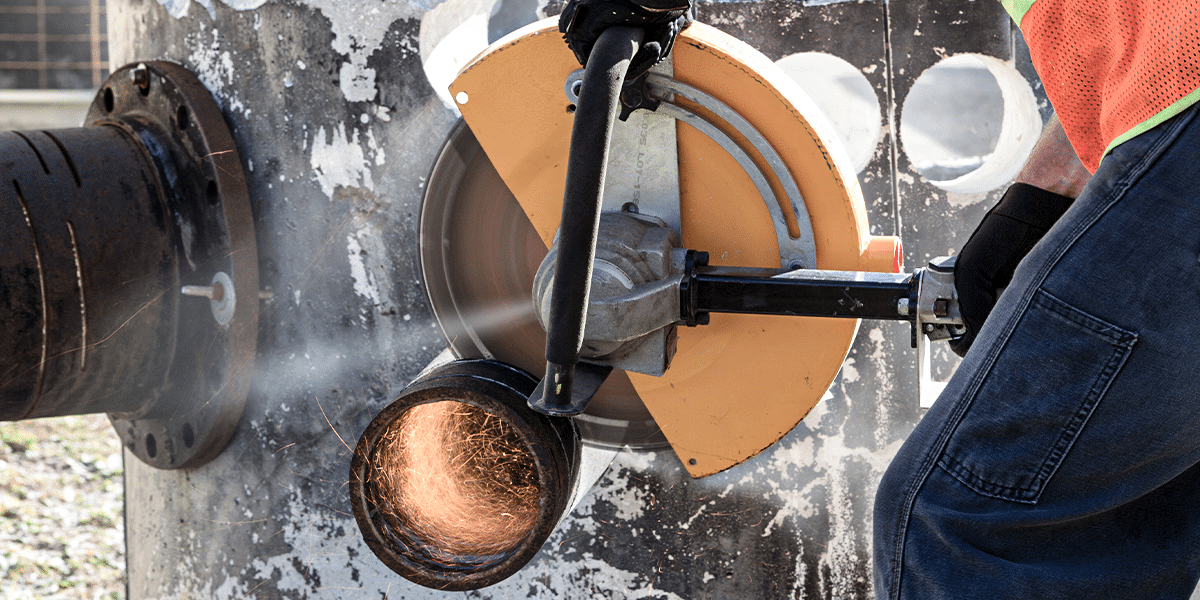
Underground utility workers understand just how important it is to have concrete cutting tools at their disposal.  Known for having to work in awkward locations, many times under duress, utility workers commonly utilize concrete cutting tools like chainsaws to open gaps in concrete structures in order to maintain or perform repairs to existing structures.  These structures are intentionally inconveniently constructed to deter non-utility workers from disturbing local water or sewage lines.  These underground pipes need to be preserved from mainstream access.  In doing so, manufacturers have developed tools to aid municipal workers, especially underground utility workers, to gain access to these difficult areas, including gas powered chainsaws for areas lacking electrical outlets and hand saws for those tight space jobs which may even be air-powered to protect the health of the utility worker.

Tips for Staying Safe While Cutting Concrete

Protecting the health of construction workers is crucial.  Concrete cutting emits silica dust into the air of the surrounding workspace.  This silica dust is toxic and has been proven to cause multiple health hazards to concrete workers.  It is imperative that systems are put in place to remove the concrete cutting silica byproduct before it can be inhaled.  The first precaution that can be taken is wet cutting the concrete as opposed to dry cutting.  This is the easiest way to reduce the dust.  A second way to protect workers from silica dust is through protective face coverings.  These filter out the dust before it can reach the worker’s nasal passages.  A third way to reduce silica dust during the concrete cutting process is through dust shrouds or dust collection systems that eliminate dust from the air immediately.

U.S. Saws is an innovator in the concrete tool industry.  As concrete’s versatility gains popularity and its use becomes more prevalent in all aspects of society, U.S. Saws remains on the cutting edge of tool manufacturing for cutting concrete.  Contact U.S. Saws today to find the concrete cutter to meet your specific needs.

Easy Use with One Man Polymer Pump

Surface prep is long, arduous, dirty work.  Contractors are always looking for ways to complete the job more efficiently.  One way to save money on labor is through the investment in innovative tools that simplify the work.  One such tool is the one man polymer pump.  If you’re in the construction business and need to complete surface prep jobs efficiently, then this is the tool for you.

Polymer Pumps and Surface Prep

Concrete flooring is a versatile flooring option that can be as utilitarian as a sturdy warehouse or a glossy painted floor in a swanky high-rise condo.  While the materials may be fairly inexpensive (as far as high-end flooring goes), prepping concrete floors is a long process with several precise steps required to create that perfect finish.

Concrete cracks.  It’s a fact of life. This is due to temperature changes in the concrete which causes shrinkage.  It’s versatility, however, has led contactors to develop ways to make those cracks work for them.  As a concrete slab is laid, control joints need to be created in precise measurements to allow the cracks to form in predetermined areas.  The control joints require a filler to provide a seamless surface for finishing.

The control joint filler needs to be strong, yet flexible.  The flexibility is needed in order to move with the concrete as it undergoes its natural changes.  This helps reduce any further cracking in the slab as well as the appearance of cracks in the final paint or epoxy finish. One of the optimal choices for control joint filler is polyurea.

Polyurea joint filler is fast acting.  Some polyurea fillers will set in twenty minutes, allowing contractors to start the next step in the finishing process:  sanding.  If epoxy is used for the filler, further construction will have to wait at least 8 hours for the epoxy to cure.  Polyurea is definitely the right choice for time sensitive projects.

In order to apply polyurea or epoxy, you need a pump to apply the materials in a fast and precise manner.  The pumps are two tank systems that dispense the polyurea or epoxy with a hardener.  Equipped with a dispensing rod that typically has on/off controls as well as speed controls, the polymer pump allows for precise placement of the polymer materials in the control joint without making a mess on your new concrete slab.  Pumps like U.S. Saws’ Dual Component Polymer Pump are two person systems.  One person works the dispensing wand, controlling the joint filling procedure, while the second person controls the movement of the pump and ensures there is enough material in both tanks to complete the job.

How Does the One Man Pump Help the Process?

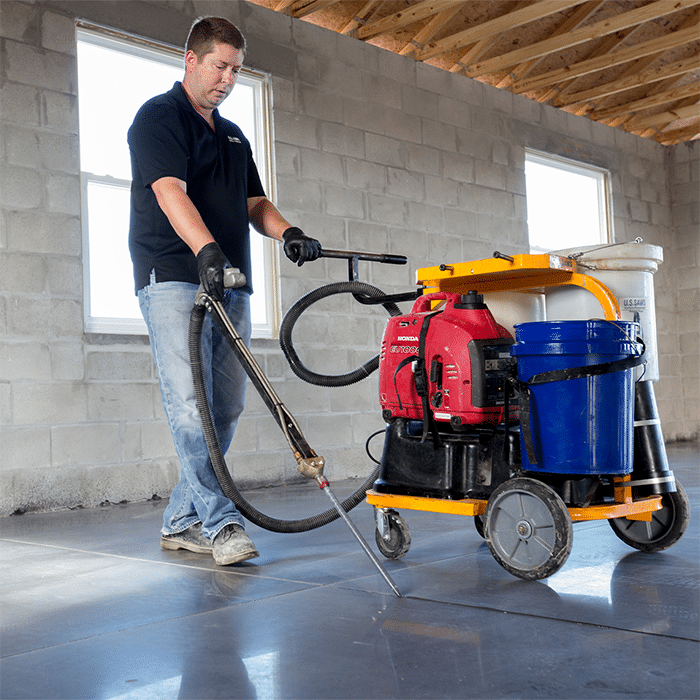
The advent of the one man polymer pump has been a game changer.  Instead of paying two people to work one machine, due to its ease of use, the one man polymer pump makes control joint filling a one man job, freeing up the second person to work on a separate aspect of the construction job.   U.S. Saws is a proud innovator of the one man polymer pump.  This pump allows the user to control the dispenser with one hand and maneuver the pump with the other.  This is accomplished through the use of a T shaped handle, which allows left and right hand operation.  These pumps come with 6.5 gallon buckets that will hold full 5 gallon jugs of joint filler, allowing the user to have a reserve in case they run low.  The tanks are also semi-transparent, allowing the operator to stay on top of their material levels without needing input from another person.  They are also equipped with enough space to hold a generator or deep cycle battery, making it the ideal option for spaces lacking electricity.  Plus, there is no need to worry about the electrical cord getting in the way and causing a mess.

U.S. Saws is an innovator in the tool industry.  As concrete flooring gains popularity, U.S. Saws remains on the cutting edge of tool manufacturing for concrete surface prep.  Contact U.S. Saws today to discuss how a one man polymer pump will benefit your business.

Industrial Surface Prep in Zeconds!

Is there anything better than the glossy sheen of a freshly finished concrete floor, or perhaps the luxurious softness of brand new shag carpet on your bare feet? unfortunately, overtime, these wonderful features, much like that new car smell, deteriorate, eventually requiring replacement.  Surface prep is a labor-intensive project.  While significant time is spent discussing methods for surface prep finishing, we also need to explore the beginning side of preparing surfaces for remediation or refinishing.  The first step in starting this project is to ensure that all residue from the removed flooring or concrete has been properly and thoroughly removed and the floor is prepped for new sealants.  This includes the removal of any carpet glue left behind after the removal process and the sanding or removal of old epoxy coatings to ensure a solid bond.  Every contractor knows proper prep is crucial to creating a perfect final product.

Why Is It Important?

Preparation is key!  The purpose of refinishing the floor is to create a surface that is better and more appealing than the one being removed.  Industrial adhesives and sealers used by contractors for construction projects are made to be long lasting and resist deterioration.  Foregoing the proper removal process of these adhesives and sealers during the remediation and refinishing process will provide a substandard finished product.  When removing old carpet, for example, it is common for carpet glue to be left behind.  Removing this adhesive is important for the quality of the newly upgraded flooring has any leftover residue will cause issues with a newly applied sealant.  The sealant will not be able to penetrate the adhesive residue it will leave a portion of your new flooring exposed, allowing for more rapid deterioration.  For flooring that already has an epoxy coating, it is important to either fully remove or at least sand down the current epoxy finish in oreder for the new coating to adhere to the surface.

Grind Residue Quickly with Zecs!

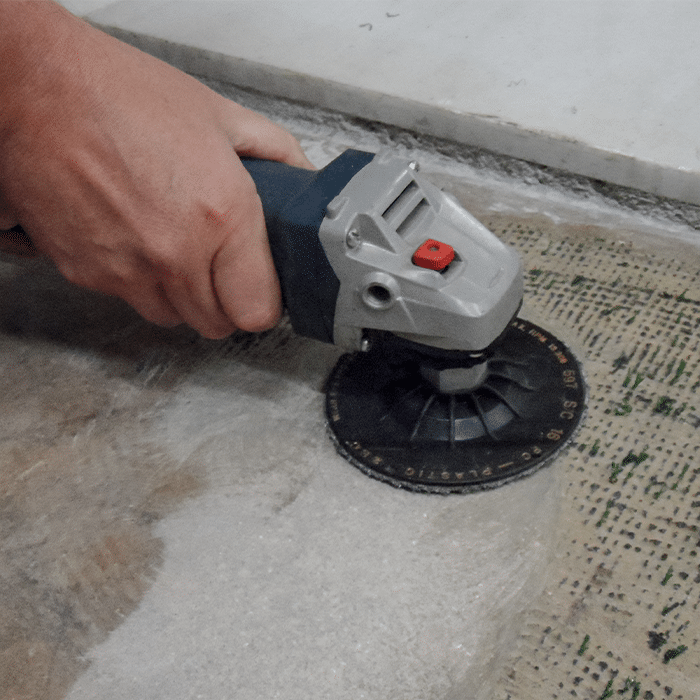
While there are multiple products and methods but may be used to remove industrial adhesives and sealants, the goal of most contractors is to use the method that gets it done the fastest and provides the most reliable results.  That’s where Zec’s abrasive discs come in.  These discs work in conjunction with industrial grinders to take down any industrial adhesive or sealant standing in the way of a newly finished floor.  Originating in Italy, the Zec discs are equipped with multiple layers of long-lasting silicon carbide grains.  These long lasting and easy to use discs are more efficient than diamond cup wheels because they resist residue buildup that typically occurs with diamond cup wheels.  These versatile discs make quick work of epoxies, urethane, rubber coatings, and even paint and rust.  They may be used on concrete, wood, and metal surfaces and may be used in wet or dry locations.  being able to use these disks in what locations or what surfaces drastically reduces any sanded particulates in the air, which is a great safety feature for all workers.

U.S. Saws is a proud supplier of Zec’s products.  They offer multipacks of discs in a variety of grit ratings to ensure contractors have the right tools for the job.  No residual adhesive or sealant will stand in the way of the perfectly finished floor when a Zec’s abrasive disc coupled with a U.S. Saws grinder is used for the job!

Don’t let residual debris stand in the way of perfect flooring. Contact U.S. SAWS today discuss all of the things you will do in your free time now that you’ve chosen Zec’s abrasive discs to take over your floor prep.


STAY SHARP!


Sign up to receive the latest info on new U.S.SAWS products, special offers and more. Enter your information below to subscribe to our email list.

© 2026 U.S.Saws All Rights Reserved. Website Designed And Developed By Power On Marketing