In demanding utility environments, crews rely on innovative construction equipment designed to perform where traditional tools fall short.
Concrete hand saws — including air-powered and hydraulic-powered models — are engineered for precision, control, and safety on the job.
These portable saws are built for cutting concrete, masonry, and ductile-iron pipe in environments where traditional gas tools may pose risks or limitations.
Whether working in confined spaces, cutting pipe in trenches, or making deep cuts in reinforced concrete, these hand-held saws deliver the versatility and durability contractors in the utility and infrastructure industries depend on every day.
In this blog, we explore how air-powered and hydraulic hand saws are used in utility and construction applications, the benefits of each design, and what to consider when selecting the right saw for your next project.
What Is a Hand-Held Saw?
A hand-held saw is a portable concrete cutting tool designed for jobs where control and maneuverability matter as much as power. Unlike walk-behind saws or wall saws, a hand held saw allows operators to make vertical or overhead cuts, work in tight trenches, and complete precise openings without large equipment. These saws are frequently used by utility and municipal crews performing water-main, sewer, or repair work, where the ability to operate safely in damp or confined environments is essential.
Air-Powered Hand-Held Saws
Air-powered saws like the U.S. Saws HS-125 provide a clean, spark-free alternative to gas-powered chop saws. Powered entirely by compressed air, they emit no exhaust fumes and require minimal maintenance.
Typical applications include:
Cutting concrete or ductile-iron pipe in trenches or vaults
Performing interior or confined-space cutting where ventilation is limited
Because compressed air keeps the motor cool and prevents sparking, air-powered saws are a reliable choice for underground and municipal projects. They’re lighter than many hydraulic units, start instantly, and can be paired with diamond blades designed for fast, smooth cuts.
Hydraulic Hand-Held Saws
Hydraulic-powered saws, such as U.S. Saws’ 24-inch Hydraulic Hand Saw, are engineered for heavy-duty concrete and pipe cutting. Driven by a separate power unit supplying pressurized hydraulic fluid, these saws deliver exceptional torque and blade speed for demanding applications.
Key features include:
Fully welded aluminum frame for durability
Dual-position front handle for control
Up to 10-inch cutting depth for deep concrete or masonry work
High-efficiency motor operating at 12 GPM @ 2500 PSI
Hydraulic hand saws are ideal for water- and sewer-line installation, structural concrete removal, and deep utility access cuts. They excel in wet environments because they use water for cooling and dust suppression while operating safely without electricity or exhaust.
Choosing the Right Blade for a Concrete Hand Saw
Performance depends as much on the blade as on the saw itself. U.S. Saws manufactures a range of diamond blades engineered for professional cutting.
When selecting a blade, contractors should consider:
Material type: Harder bonds for abrasive materials like concrete and asphalt; softer bonds for dense materials like tile or stone.
Cutting style: Segmented blades for aggressive speed, turbo-rim designs for balanced control, and multi-purpose blades for mixed materials.
Wet cutting: Always recommended for concrete and masonry to reduce heat, extend blade life, and control silica dust.
By adhering to these steps, crews can improve productivity while meeting job-site safety standards.
Why Contractors Choose U.S. Saws
For more than 30 years, U.S. Saws has developed specialty cutting equipment that meets the real-world needs of construction and utility professionals. The company’s air-powered and hydraulic concrete hand saws combine portability, torque, and safety features that allow crews to work efficiently in challenging conditions.
Many models are manufactured in the U.S.A. and supported by product training, on-site demonstrations, and customer service from experts with decades of field experience.
Explore the complete selection of hand-held concrete saws and diamond blades at U.S. Saws to find the right tool for your next project.
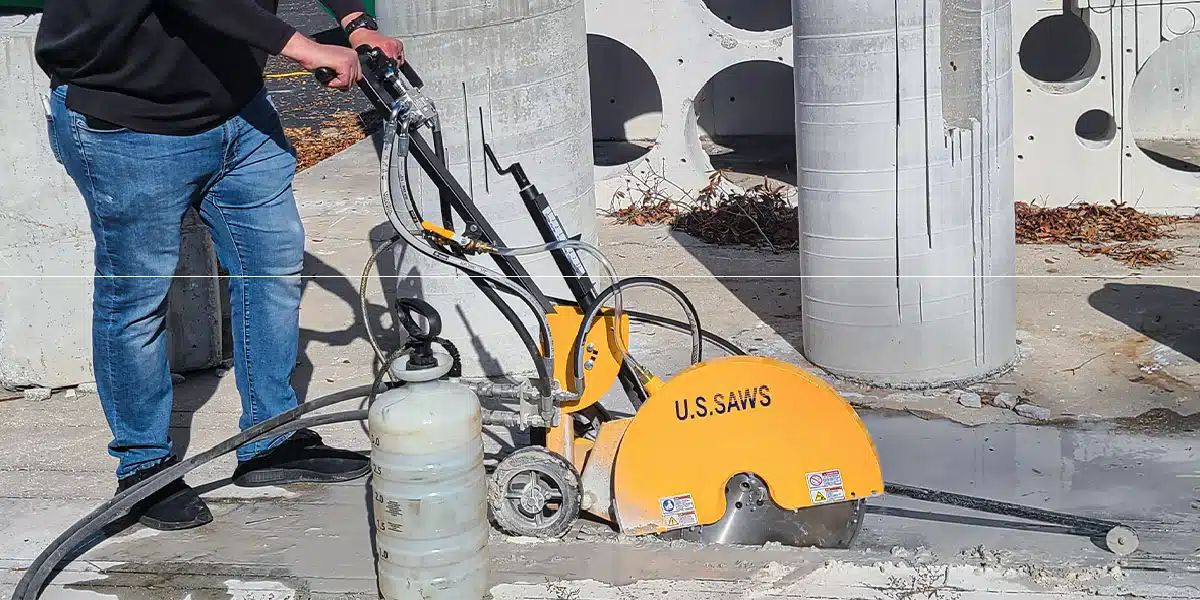
A walk behind saw is one of the most essential tools for those who need to cut through sidewalks, roads, driveways, or large concrete slabs. Unlike smaller handheld models, a heavy duty walk behind saw is designed for long, deep, and precise cuts. Contractors rely on these saws for everything from expansion joints to patch repairs, and their efficiency makes them a staple on construction sites.
What Is a Walk Behind Saw?
A walk behind saw for concrete is a large cutting machine mounted on wheels that allows the operator to guide the saw steadily across a surface. Powered by gas, diesel, air, hydraulic, or electricity, these saws use diamond blades or other specialized saw blades to cut through concrete, asphalt, stone, and other hard materials. Because of their stability and cutting depth, walk behind saws are the preferred choice for heavy-duty jobs where handheld tools fall short.
How a Walk Behind Saw Works
The power of a concrete walk behind saw comes from its motor and blade combination. Most saws use water to cool the blade and reduce harmful silica dust while cutting, which is an OSHA requirement for many applications. By adjusting the depth controls, operators can make cuts up to 7.5 inches deep, depending on the blade size and model.
Contractors often describe these machines as “push saws” because the blade pulls the saw forward during cutting, while the operator guides it smoothly along the cut line.
Benefits of Using a Walk Behind Saw
There are multiple benefits of using a walk behind saw, including:
Deeper cuts: A walk behind saw for concrete can reach depths handheld saws cannot, making it ideal for thick slabs and pavement.
Cleaner lines: The weight and stability of the saw reduce vibration, ensuring straighter cuts.
Efficiency: Projects are completed faster compared to using multiple passes with a smaller saw.
Less operator fatigue: Because the machine carries its own weight, operators exert less energy than with handheld tools.
Common Uses for Walk Behind Saws
Walk behind saws are a versatile tool. However, these tools are most often used for difficult jobs, including:
Cutting expansion joints in newly poured concrete.
Repairing or removing damaged sidewalks and driveways.
Cutting trenches for plumbing, electrical, or utility installation.
Roadwork and asphalt patching.
Industrial flooring in warehouses and factories.
How to Use a Walk Behind Saw Safely
Knowing how to use a walk behind saw correctly is critical for both performance and safety. OSHA emphasize several key safety measures:
Wear proper PPE: Safety glasses, gloves, ear protection, and a respirator or dust mask if dry cutting .
Control dust: Use wet cutting whenever possible to minimize exposure to silica dust .
Check the blade: Always use the correct blade for the material, and never operate a saw with a damaged blade.
Operate steadily: Start the saw, open the water valve, lower the blade slowly into the surface, and guide the machine without twisting or forcing direction.
Ventilation: Only use fuel-powered saws outdoors or in well-ventilated spaces to prevent carbon monoxide buildup.
When considering a walk behind, you should evaluate:
Power source: Gas or diesel models for outdoor heavy-duty work, electric models for indoor jobs.
Blade compatibility: Match the saw to the correct diamond blade type for the material.
Cutting depth: Consider the maximum depth required for your projects.
Jobsite conditions: Indoor/outdoor environment, dust regulations, and ventilation.
U.S. Saws offers a range of heavy duty walk behind saws for sale built to meet the demands of today’s contractors.
Frequently Asked Questions About Walk Behind Saws
What is a walk-behind saw?
A walk-behind saw is a large cutting machine on wheels that allows an operator to cut concrete or asphalt with stability and precision.
How deep can a walk-behind saw cut?
Most walk-behind saws cut between 7 and 24 inches deep, depending on blade size and power.
How do you start a walk-behind concrete saw?
Start-up varies by model, but generally involves checking the blade, ensuring fuel or power is connected, engaging the water system, and lowering the blade slowly into the surface. Always follow manufacturer instructions.
What is a rotating saw called?
A rotating saw is commonly called a circular saw. With a diamond blade, circular saws can cut concrete, though deeper cuts require a walk behind saw.
Final Thoughts on Concrete Walk Behind Saws
A walk behind saw is the contractor’s choice for durability, depth, and precision. From sidewalks to roadwork, these machines save time, reduce operator strain, and deliver professional results.
A segmented diamond blade is one of the most widely used cutting tools in construction and masonry. Known for its speed, durability, and cooling efficiency, a segmented blade is designed to handle tough materials like concrete, asphalt, brick, and stone. But how do segmented blades differ from continuous rim or turbo blades, and when should you use one?
In this blog, we’ll explore what segmented diamond blades are, their benefits, the best applications, and how they compare to other blade types.
What Is a Segmented Diamond Blade?
A segmented diamond blade is built with individual sections, or “segments,” embedded with synthetic diamond particles. These segments are separated by gullets, small spaces that allow for airflow, cooling, and debris removal during cutting.
This design makes segmented blades ideal for aggressive, high-speed cutting. Unlike continuous rim blades, which create smoother edges, segmented blades are designed for efficiency and durability on the hardest surfaces.
So, why use a segmented diamond blade? Because when speed, power, and versatility are more important than a polished edge, no other blade type performs as well.
Benefits of Segmented Blades
The advantages of using a segmented diamond blade go beyond its rugged design. These blades are chosen by professionals for several reasons:
Faster cutting: The open gullets help the blade cut aggressively, saving time on large projects.
Cooling efficiency: Cooling holes circulate air to reduce heat, prevent warping, and extend blade life.
Durability: Segmented blades withstand tough, abrasive materials without wearing down quickly.
Versatility: They can be used for both wet and dry cutting in a wide variety of applications.
Common Applications of Segmented Diamond Blades
Segmented blades are designed to perform well in some of the toughest jobsite conditions. Contractors rely on them for:
Concrete and reinforced concrete: Sidewalks, driveways, foundations, and slabs.
Masonry: Brick, block, and stone cutting for construction or landscaping.
Asphalt: Road and pavement repair projects.
Why Segmented Diamond Blades are Beneficial for Pro Contractors & Municipal Crews
Segmented diamond blades are ideal for professional contractors and municipal crews because they deliver fast, durable, and versatile cutting performance on tough materials like concrete, asphalt, masonry, and pipe.
Here are the key reasons:
Fast, Aggressive Cutting
Deep, Efficient Cuts: The segmented rim features wide gullets (gaps) that quickly remove debris and allow for aggressive cutting, which saves time on large projects such as road repairs, curb cuts, and pipe installations.
Less Friction & Heat: The open segments reduce contact with the material, lowering friction and allowing higher cutting speeds compared to continuous-rim blades.
Cooler Operation & Longer Blade Life
Superior Heat Dissipation: The gaps between segments allow air to circulate and keep the steel core cool, reducing the risk of overheating or blade warping.
Extended Lifespan: By staying cooler and resisting thermal stress, the blade maintains its diamond bond longer, meaning fewer blade changes and lower cost per cut.
Heavy-Duty Durability
Handles Reinforced Materials: Segmented blades are strong enough to cut through concrete with rebar, cured asphalt, and hard masonry without chipping or cracking.
Built for Jobsite Demands: Their robust design withstands the rigors of municipal street work, utility trenching, and large commercial projects.
Versatility Across Applications
Wet or Dry Cutting: They can be used with water for dust suppression and cooler cutting or run dry when water is not available—ideal for street repairs or utility work.
Multiple Materials: From ductile iron pipe to sidewalks and curbs, one blade can often handle the full range of municipal or construction needs.
How to Choose the Right Diamond Blades
Not every segmented diamond blade is the same. Choosing the right one depends on the job and the equipment. Factors to consider include:
Blade size: Match the diameter to your saw, whether handheld or walk-behind.
Wet vs dry cutting:Wet cutting extends blade life and reduces dust, while dry cutting offers convenience.
Bond hardness: A softer bond cuts harder materials, while a harder bond cuts softer, abrasive materials.
Application: Concrete, asphalt, masonry, or stone may require different segment configurations.
Safety Considerations for Segmented Diamond Blades
Safety is always a priority when working with diamond blades. OSHA requires that walk-behind saws and grinders cutting silica-containing materials be equipped with water delivery systems that apply water to the blade to suppress dust (OSHA 29 CFR 1926.1153).
NIOSH also emphasizes the effectiveness of wet cutting methods in reducing respirable crystalline silica, noting that water-fed tools significantly lower dust levels compared to dry cutting (NIOSH Silica Guidance).
Always wear proper PPE, including safety glasses or a face shield, hearing protection, respiratory protection when dry cutting or indoors, gloves, and steel-toed boots.
Frequently Asked Questions About Segmented Diamond Blades
Why use a segmented diamond blade?
For fast, aggressive cuts in concrete, asphalt, brick, and stone where a smooth finish is not the priority.
Can segmented blades cut tile?
While possible, it is not recommended. Continuous rim blades are better for tile because they provide chip-free edges.
How long does a segmented blade last?
Lifespan depends on material, blade quality, and whether you cut wet or dry. In general, wet cutting extends blade life significantly.
Which is better: segmented or continuous?
Neither is “better” overall. Segmented blades are better for concrete and masonry, while continuous rim blades are better for tile and delicate materials.
Final Thoughts on Segmented Diamond Blades
A segmented diamond blade is one of the most reliable, versatile tools for contractors, landscapers, and masons. With unmatched durability, cutting speed, and cooling efficiency, these blades are essential for concrete, asphalt, and masonry jobs.
Core drilling is the process of using a hollow drill to extract samples from materials like concrete or stone. This provides crucial data for analyzing the material’s properties. In this article, you’ll learn about what core drilling is, how it works, its types, and its applications in various industries.
Key Takeaways
Core drilling is a critical technique in construction that enables the extraction of samples for material testing, essential for assessing structural integrity and material properties.
The drilling process involves meticulous site preparation, proper drill anchoring, correct drill bit installation, and safe operation methods, all of which contribute to accurate sample retrieval.
Investing in high-quality core drilling equipment and choosing the right drill bit type significantly enhances the efficiency, safety, and overall success of construction projects.
Understanding Core Drilling
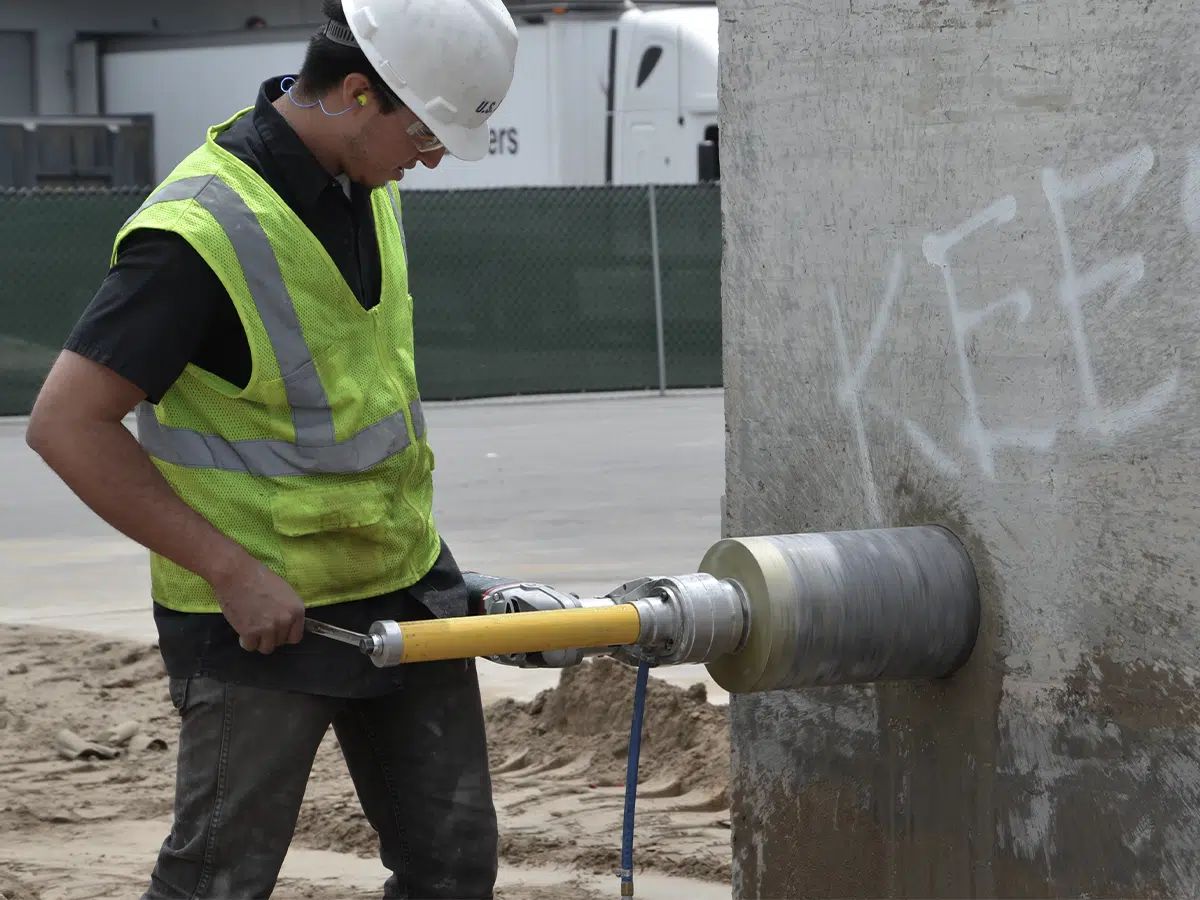
Core drilling involves utilizing a hollow drill to bore holes into various surfaces, which enables the collection of core samples for evaluation. This method is crucial within fields such as construction, mining, and geology because it allows experts to assess characteristics like density, composition, and strength of materials or geological formations. These insights from the extracted cores are essential for analyzing conditions before commencing construction activities.
The process of core drilling can effectively cut through diverse substances including stone, wood, and ice to obtain important samples. Whether employed in concrete core drilling to evaluate structural integrity or removing segments of rock for geological research purposes, drilling provides the meticulous accuracy necessary to ensure that construction endeavors proceed safely and dependably.
Types of Core Drilling
The practice of core drilling is primarily categorized into two distinct types: soft coring and hard coring, each designed for specific applications based on the materials they are used to penetrate and the depths required.
Soft coring proves effective when dealing with unconsolidated substances, offering a capability to drill as deep as 500 feet. Utilizing dual nested barrels allows this technique to excel in retrieving samples from pliable or less dense substrates such as soil or some forms of sediment.
On the other hand, hard coring—often referred to as diamond coring—involves incorporating drill bits that are coated with diamonds in order to bore through sturdier compositions. This robust method facilitates collection of solid rock specimens and can achieve penetration up to an impressive depth of 5,000 feet. It is predominantly employed when one needs to drill into challenging materials like concrete or densified rock formations.
The Core Drilling Process
The process of core drilling involves meticulous planning and execution, which includes a sequence of critical steps starting with the preparation of the drill site to running the core drill itself. Every phase guarantees both worker safety and the integrity of collected core samples.
Preparing the Drill Site
Before starting a core drilling operation, it is crucial to prepare the job site with attention to safety and efficiency. This preparation includes conducting an in-depth inspection of both the core drill equipment and the surrounding environment, as well as clearing any obstacles or hazards that could hinder a safe and uninterrupted drilling process.
Such careful preparations are vital not only for maintaining safety, but also for preserving the quality of the drilling procedure itself. By diligently readying the site, one can mitigate possible complications that may otherwise affect the integrity of the obtained drill cores.
Anchoring the Core Drill
Ensuring the core drill is correctly anchored preserves the structural integrity of the holes created by drilling. Employing anchoring methods like using bolts or ceiling jacks keeps the core drill steady throughout its operation, which is essential for acquiring precise samples of cores.
Attaching a suitable stand to rig-mounted drills with devices such as anchors, bolts, or vacuum seals stabilizes them during use. This precision aids in achieving exact drilling results and mitigates any potential movement that could cause mistakes or safety incidents.
Installing the Drill Bit
Correctly installing the drill bit is critical. Ensuring the bit and core drill are not hot and wearing protective gloves are key safety measures. The drill bit must be clean and free from contaminants that could affect its performance.
Proper installation involves cleaning the bit and drill spindle of dirt or contamination. The bit is then threaded onto the drill spindle and tightened securely with a bit wrench to ensure it stays in place during drilling.
Operating the Core Drill
To ensure a precise cut and maintain the quality of the core sample, it is necessary to apply consistent pressure when using a core drill. During hard coring operations, fluid or air is used by the outer barrel to clean the surface being drilled. This process aids in preserving the integrity of the extracted core.
Wet Drilling vs. Dry Drilling
Drilling a core can be accomplished through dry or wet techniques, each offering its own set of benefits and constraints. Wet drilling utilizes water to keep the drill bit cool and to reduce dust creation, whereas dry drilling is conducted without water, which makes it appropriate for situations where the use of water is impractical.
Wet Core Drilling
Wet core drilling provides cleaner holes and reduced dust generation. The water cools the drill bit, enhancing its lifespan and overall efficiency. This method is particularly useful for drilling through concrete, soft or hard brick, and reinforced concrete.
Wet core drilling also creates a safer and cleaner work environment by minimizing dust, protecting workers’ health, and reducing the need for extensive cleanup after drilling.
Dry Core Drilling
Drilling without the use of water, known as dry core drilling, is particularly beneficial in scenarios where introducing water could be dangerous, for example during electrical installations. Nevertheless, this technique results in increased dust production and places greater strain on the cutting edges because there’s no liquid to reduce friction and heat buildup—conditions that can lead to premature wear or damage of the drill bits.
Despite its inherent difficulties, employing a dry core method remains valuable for specific tasks. It demands meticulous handling to both preserve the durability of drill bits and safeguard those operating the drill.
Applications of Core Drilling in Construction
The practice of core drilling plays a crucial role in the construction industry, serving to extract samples for lab testing, especially relevant in sectors such as mining and dealing with concrete. This approach is essential for assessing the structural soundness of buildings and various infrastructures. By examining these obtained cores, engineers can ascertain both material quality and foundational strength before initiating any building work.
Core drilling facilitates accurate placement of utilities including electrical lines as well as systems related to plumbing and heating, ventilation, and air conditioning (HVAC). While wet core drilling offers efficiency through its rapid penetration capability—beneficial when working on projects involving plumbing or HVAC—the dry core method is preferred where water may pose a risk within electrical settings.
Thanks to its precision-focused nature, this form of drilling helps reduce disturbance at the site by generating significantly less noise and vibration compared with more conventional techniques used for cutting concrete. As a result, it not only conserves the integrity of adjacent materials but also limits post-operation cleanup demands thereby sustaining tidiness throughout construction processes.
Safety Practices in Core Drilling
To safeguard workers from the dangers associated with core drilling, it is essential to adhere to specific safety measures. Protective gear such as safety glasses, ear protection, and masks for dust prevention are crucial in lessening risks like auditory harm due to noise pollution and respiratory issues caused by inhaling silica particles.
Engaging in core drilling operations on tough materials can be strenuous and induce exhaustion. To manage this fatigue effectively and bolster overall safety:
1. Prioritize frequent breaks for adequate rest.
2. Employ correct manual handling methods to reduce physical stress.
3. Conduct meticulous inspections of all equipment before use, ensuring every tool functions correctly.
These recommendations are pivotal in averting injuries and fostering a secure work environment.
Maintaining a safe workspace not only revolves around personal protective measures, but also strict adherence to established procedures and security protocols. This encompasses providing continual education for employees about updated safety techniques along with proper operation of drilling machinery.
Types of Core Drilling Machines
There are multiple core drilling machines available, each tailored for particular uses. Universal core drilling machines offer flexibility, capable of executing drills at a multitude of angles to accommodate diverse projects.
Compact and easily movable, portable core drilling units come equipped with an electric motor, speed reducer, support column, and a light base. Laboratory coring devices are designed for precision cutting through hard substances such as rocks and concrete in controlled environments. Pavement core drilling machinery combines durability with portability to penetrate different kinds of materials effectively.
Choosing the appropriate machine is crucial due to the distinct advantages provided by each type. It’s important to align the choice with the specific demands of your project.
For a modular, high-precision solution, consider the U.S.SAWS Core EZ | Core Drilling Machine—designed for faster, more accurate concrete drilling in tight or elevated spaces.
Selecting the Right Drill Bit
It is essential to choose the correct core drill bit for effective drilling and to ensure that sample integrity is preserved. Diamond-tipped drill bits are often selected for concrete core drilling because they excel at slicing through hard materials due to their superior hardness compared to carbide-tipped bits, making them highly suitable for penetrating resistant materials. Specifically, diamond concrete core drills shine in these scenarios.
On the other hand, when dealing with softer substances, carbide-tipped core drill bits are typically employed. For exceedingly hard alumina varieties, material with substantial metal content, sophisticated ceramics as well as natural and precious stones. Metal-bonded diamond-core drill bits emerge as the optimal choice. Securing an appropriate drill bit is key not only for a seamless drilling process but also in capturing high-quality samples.
Advantages of Core Drilling
Core drilling is highly regarded for its significant benefits, which have made it a go-to technique in construction and other industries. Notable advantages of core drilling include:
1. Its exceptional precision that guarantees outcomes align with the exact specifications of a project.
2. The utilization of hollow drill bits designed to extract samples from materials for thorough examination.
3. The provision of critical insights into the properties and characteristics of various materials.
This method plays an indispensable role in ensuring both quality and reliability across numerous construction projects.
When implementing wet drilling, durability within drilled holes is improved due to reduced debris buildup and enhanced cooling effects on drill bits, resulting in increased longevity for these components. Specifically, diamond-embedded drill bits are crucial when tackling very hard substances. They function by grinding down surfaces instead of simply cutting through them. By doing so, this approach maintains the structural integrity around the area being worked on while also diminishing post-drilling cleanup efforts.
Inverted Drilling Techniques
Boring from beneath a concrete structure, also known as inverted drilling, is an essential technique for projects where access is restricted or the drilling must be done from underneath. Hydraulic core drills are favored in this approach due to their capacity for improved operator movement and functionality under waterlogged conditions. This practice proves especially beneficial when employed within concrete structures.
The use of these core drills amplifies the efficiency of inverted drilling by providing ease of maneuverability to operators and maintaining operational effectiveness even in aquatic environments. Consequently, they become highly suitable for projects that involve underwater operations or those necessitating boreholes initiated from below a structure during specific construction and maintenance activities.
Investing in Core Drilling Equipment
Securing top-notch core drilling machinery is essential for the effectiveness and security of construction endeavors. Cutting-edge apparatus, such as those furnished by A-Core, boast the ability to penetrate depths exceeding 60 feet, displaying a high level of technological advancement. Such premium equipment not only amplifies the efficiency of projects, but also upholds safety standards for laborers.
In essence, allocating funds toward sophisticated drilling tools significantly contributes to the triumphs in construction activities. Dependable machines elevate work output and guarantee that objectives are achieved with meticulousness and adherence to safety protocols.
For instance, you can explore core drilling equipment from US Saws—offering solutions that merge portability, precision, and safety features for a range of construction needs.
Summary
Core drilling is an essential practice within the construction sector, delivering precise and reliable outcomes for a variety of tasks. This discussion has encompassed everything from understanding the fundamental concepts and varieties of core drills to delving into intricate procedures and adherence to safety standards, highlighting how this approach plays a pivotal role in advancing construction endeavors. Enhanced performance and safety during core drilling activities are ensured by employing state-of-the-art machinery along with selecting appropriate drill bits.
In summary, it’s clear that core drilling not only bolsters the structural integrity of building initiatives but also guarantees their completion with minimal disturbance alongside optimal efficiency. Leveraging proper techniques coupled with advanced equipment significantly contributes to securing successful results in the realm of construction.
Core drilling is a method that uses a hollow drill bit to extract a clean cylindrical core of material for analysis. This technique is commonly used in geological and construction applications to obtain samples for study.
Soft coring is employed for extracting samples from unconsolidated materials at depths of up to 500 feet, utilizing nested barrels for effective sample retrieval.
The practice of core drilling presents hazards that include the breathing in of silica dust, being subjected to high levels of noise, and experiencing physical exhaustion. Each of these can profoundly affect health and safety.
To reduce the risks associated with these dangers, it is essential to apply appropriate safety protocols during the core drilling process.
Construction work can be dangerous, and it’s important for a contractor’s business that its employees are being responsible and practice upholding certain safety standards.
Those standards are set in the United States by the Occupational Safety and Health Administration (OSHA).
OSHA is an agency within the Department of Labor that is responsible for ensuring safe and healthy working conditions for employees in the United States. They set and enforce standards that employers must follow to keep their employees safe on a job site. These standards cover everything from protective equipment to safe work practices and environmental health.
As a business owner, it’s important to understand the significance of OSHA compliance and the impact it can have on your business. By complying with OSHA standards, you not only ensure the safety of your employees, but also protect your business from potential legal and financial consequences.
Whether you’re a large corporation or a small business owner, understanding the importance of OSHA compliance in construction is crucial for maintaining a safe workspace. By following OSHA standards and best practices, you can protect your employees and your business, while also contributing to a culture of safety and well-being in the construction industry.
Overview of OSHA Compliance in Construction
OSHA was founded in 1971 when the U.S. Department of Labor established the agency to enforce the Occupational Safety and Health Act. The agency covers most private sector employers and employees in all 50 states, plus the District of Columbia and U.S. territories.
Construction and municipal workers face some of the most hazardous working conditions in America. Whether it’s working on a high-rise building or repairing a busy street, these workers are constantly exposed to potential safety hazards. This is why compliance with OSHA regulations is so important.
Some of the common hazards that these workers face include:
Falls
Electrocutions
Struck-by accidents
Caught-in/between accidents
OSHA has specific standards and regulations that apply to the construction and municipal industries. These cover a wide range of topics, including fall protection, respiratory protection, electrical safety, and hazardous materials handling.
One of the most important aspects of OSHA compliance is training. Employers are required to provide comprehensive training to their employees on the hazards of their jobs, as well as on the proper use of the equipment they will use and the safety protocols associated with it.
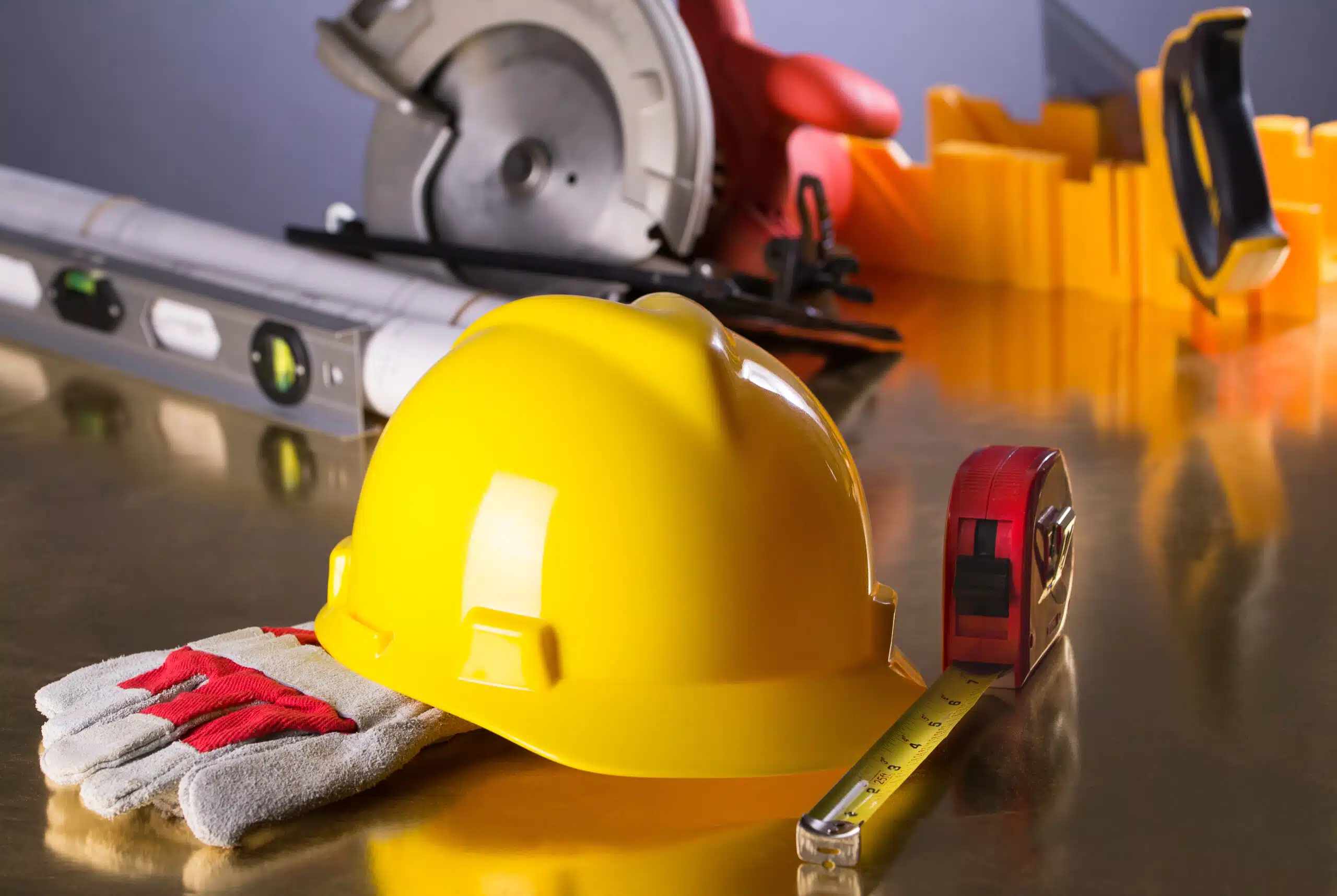
In addition to training, employers must also provide their employees with personal protective equipment (PPE) and ensure that it is being used properly. This may include hard hats, safety glasses, masks, gloves, and other equipment that is specific to the hazards of their jobs.
Another important aspect of OSHA compliance is recordkeeping. Employers are required to maintain detailed records of workplace injuries and illnesses, as well as any OSHA inspections that have taken place. These records must be kept for a specified period of time, typically five years, and must be made available to employees and OSHA inspectors upon request.
The Consequences of Non-Compliance
Failing to comply with OSHA regulations has serious repercussions for business owners, including fines, penalties, and even criminal charges in some cases. Non-compliance with these regulations can lead to serious injuries or fatalities for workers.
Penalties for non-compliance include:
Significant OSHA fines and citations
Increased insurance premiums
Project delays or work stoppages during investigations
Legal liability and, in severe cases, criminal charges
For contractors, the cost of non-compliance is almost always greater than the cost of prevention.
Benefits of OSHA Training
Concrete has become popular over the years, not only for industrial purposes, but also for residential flooring. That glossy finish comes at a price, and oftentimes, it is the concrete worker who pays for it. They face numerous hazards, including exposure to silica dust and other airborne particles. This can lead to a variety of respiratory problems, even cancer.
To ensure the safety of concrete workers and all construction workers, it is important for contractors to provide comprehensive OSHA compliance training on dust collection and other safety practices.
There are multiple benefits to OSHA training, including:
Improved Safety: Helps workers identify and avoid potential hazards on the job, including those related to dust collection.
Increased Productivity: Properly trained workers are able to work more efficiently and effectively.
Reduced Costs: Reduces the risk of accidents and illnesses, avoiding costly workers’ compensation claims and fines.
Improved Morale: When workers feel like their employers care about safety, job satisfaction and retention improve.
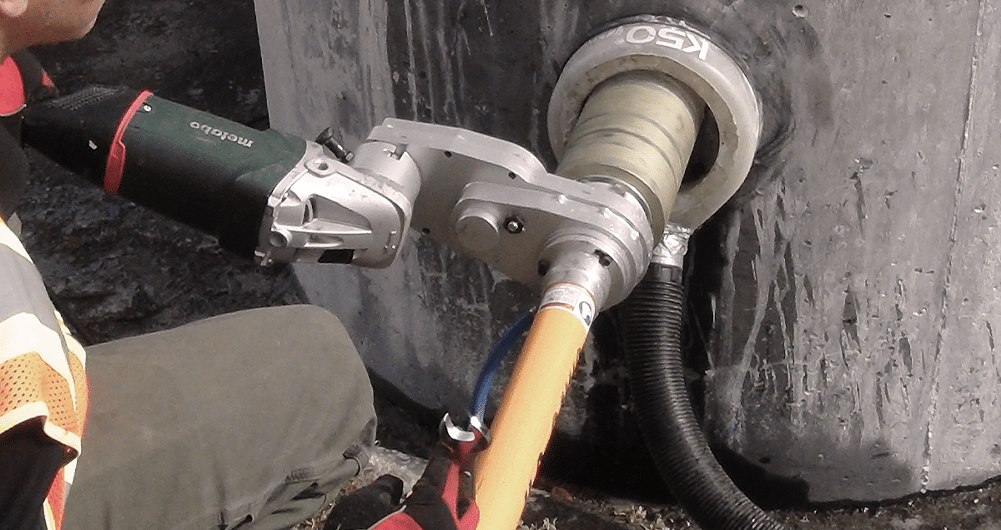
Dust collection is also a critical component of preventing respiratory problems and other health issues related to airborne particles. Proper training on the use of dust collection equipment can significantly reduce risks.
Improved Air Quality: Using a dust collection system properly helps protect workers and the surrounding environment.
Reduced Equipment Damage: Dust buildup can damage equipment over time. Using dust vacuums properly helps extend the life of tools and machines.
Providing OSHA training benefits employees, but it also helps business owners save money in the long run by lowering insurance premiums, protecting equipment, and reducing costly turnover.
Methods of OSHA Compliance
One of the key components of compliance with OSHA regulations is the use of exposure control methods, which can be implemented through the performance option or scheduled self-monitoring.
Specified Exposure Control Methods: A set of OSHA guidelines outlining how employers must protect workers from exposure to hazardous substances, such as respirable crystalline silica.
Performance Option: Employers may use any combination of controls that achieves the same protection level as OSHA’s specified methods, such as combining dust collection with administrative controls.
Scheduled Self-Monitoring: Employers monitor the workplace regularly to ensure exposure control methods remain effective.
OSHA Compliance Checklist with a Construction Focus
Provide fall protection when working at heights.
Train workers on the proper use of dust collection systems and PPE.
Maintain accurate injury and illness logs for OSHA review.
Conduct regular safety audits and inspections.
What You Can Do with an OSHA Certification
OSHA offers two different certifications to train employers and employees on proper safety measures for their respective industries. The OSHA 10- and 30-hour training programs are taught by authorized trainers through OSHA’s Outreach Training Program.
OSHA 10-Hour Training: For entry-level employees. Covers basic awareness of workplace hazards and prevention. Affordable, quick, and a plus for resumes.
OSHA 30-Hour Training: For supervisors and managers. Covers OSHA inspections, permitting, emergency plans, hazard reporting, and more.
Employee benefits include:
Increased job opportunities (many employers require certifications before hiring).
Potential for higher pay rates or bonuses.
Leadership opportunities such as safety coordinator or safety officer roles.
These certifications show employers that workers understand safety, know how to prevent hazards, and are committed to safe practices.
U.S. Saws: OSHA-Compliant Dust Collection Systems
The hazards facing construction and concrete workers are many, including falls, saw blades, toxic chemicals, and microscopic dust particles. Fortunately, companies like U.S.
Saws design tools to support OSHA compliance.
Popular dust collection systems include:
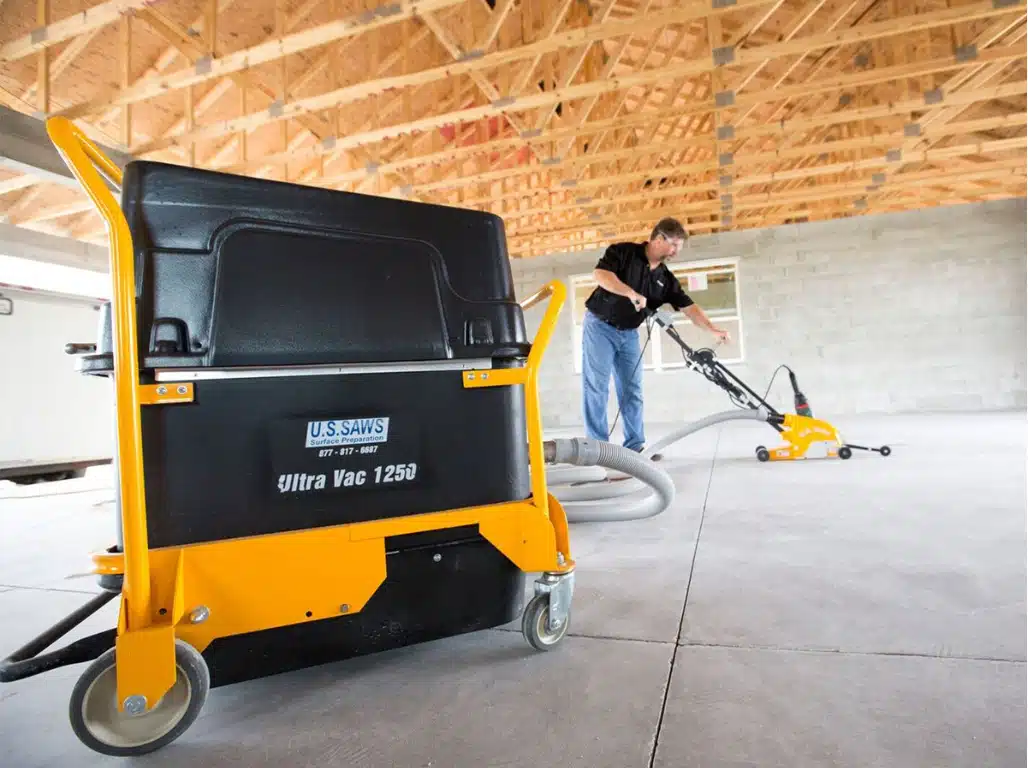
Ultra Vac 1250-G Gas Powered Vacuum — Preferred for joint clean-out saws, early entry saws, and the CC-100 Crack Chaser. Powered by a Honda GX240 motor with optional HEPA filters and Longopac bagging systems.
Ultra Vac 1250 Dust Collector — Electric-powered with dual Ametek motors, a 25-foot hose, and optional HEPA filters. Excellent for surface grinders and heavy-duty saws.
It means meeting OSHA standards to reduce hazards such as falls, silica dust exposure, and equipment risks.
What happens if my company is not OSHA compliant?
Non-compliance can lead to fines, project delays, insurance hikes, and worker injuries. OSHA provides resources for small business safety programs.
Which OSHA training is best for contractors?
Entry-level workers typically complete the OSHA 10-Hour Training, while supervisors and managers take the OSHA 30-Hour Training.
Final Thoughts
OSHA compliance is not just about regulations — it’s about protecting workers, preventing costly accidents, and ensuring the long-term success of your business. Contractors who make compliance a priority foster safer, more productive jobsites.



 1-877-817-6687