Five Key Tools for Municipal Water and Sewer Workers

Essential Municipal Water and Sewer Tools for Utility Workers

The job of a municipal water and sewer worker is not easy. Accessing those water and sewer systems takes a lot of grit and elbow grease. While these jobs are not the most glamorous or cushy, they provide a significant service to the community—without them, access to clean water would be limited. Getting dirty may be part of the job, but there are ways to reduce the dirt and the labor to make the job a little easier on the worker. The following are five key tools to help make a municipal water and sewer worker’s life a little less complicated.

Manhole Cover Lifter

Manhole covers are a necessary part of our water and sewage systems. These covers are designed to protect our water systems from access by unqualified individuals. These covers typically weigh between 250–300 lb, though heavy-duty versions can be significantly heavier (up to 900lbs). Without the proper tools, most manhole covers are not easily lifted by the average human being.

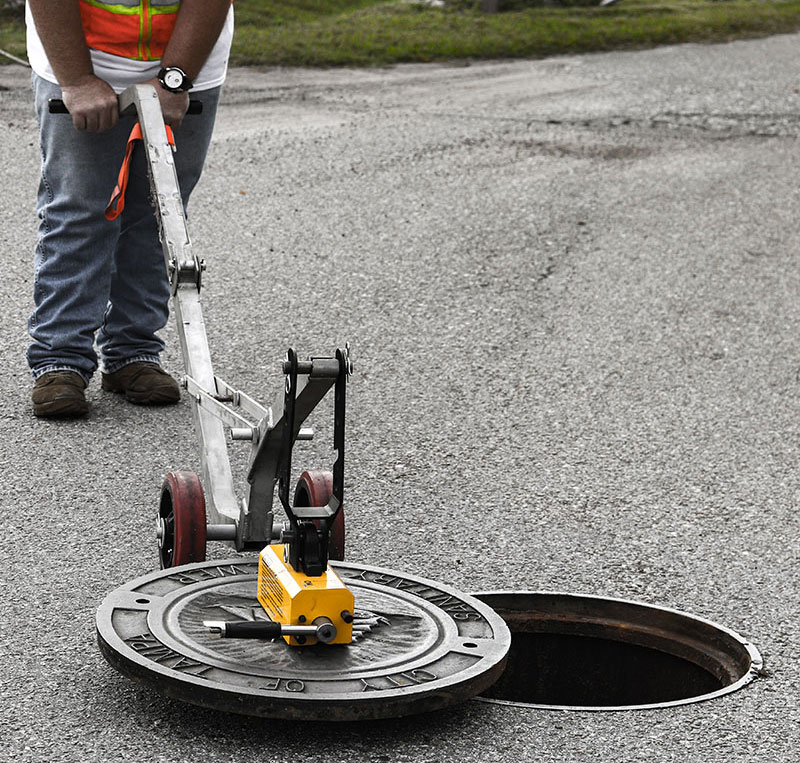
Companies like U.S. SAWS have manufactured manhole cover lifters to reduce the effort needed by municipal workers to lift manhole covers and access water systems for repairs and required maintenance. Because manhole covers vary in size and weight across the country, U.S. SAWS has developed different lifters for different needs.

For covers weighing 300 pounds or less, the Supreme Duty Collapsible Dolly Magnetic Lifter is ideal. Equipped with rubber wheels and a supreme duty magnet, it works for covers up to 36 inches in diameter and breaks down easily for quick storage.For covers up to 600 pounds, the Aluminum Heavy Duty Collapsible Dolly offers eight-inch hard wheels, a supreme duty magnet, and dual-position lifting points, making it perfect for uneven surfaces.

For the heaviest covers—around 900 pounds—the Curved Heavy Duty Magnetic Lifter uses a mega duty magnet and folds for easy transport and storage while protecting workers from back injury.

Valve Exerciser

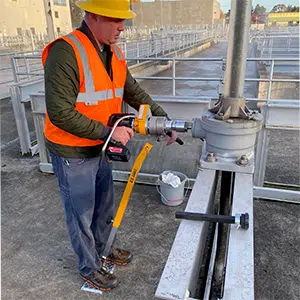
One task of municipal water and sewer workers is maintaining consistent water flow and quality for the community. Regular maintenance is critical for valves, which regulate, direct, and control water. If valves become stiff or rigid, they must be exercised to maintain flexibility and prevent backflow issues. Many of these valves are in hard-to-reach locations.

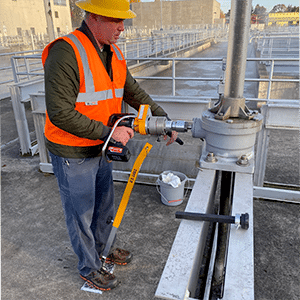
U.S. SAWS offers battery-powered valve exercisers to make the job easier. The VEX-400 is a portable, heavy-duty valve exerciser powered by 18-volt batteries and a Metabo drill motor, designed to work in tight and awkward locations.

Utility Pump

Standing water is a constant challenge for municipal workers, often blocking access to underground structures such as meter pits and valve boxes. Removing this water quickly is essential.

U.S. SAWS supplies the Dewalt Battery Powered BP1520 Battery Pump, which features a PVC body and housing for rust and corrosion resistance. Powered by a 20V DeWalt or 18V Milwaukee battery, it fits into tight spaces and pumps up to 15 gallons a minute while weighing only six pounds.

Hand-Held Saws

Every municipal water worker’s toolbox needs a reliable saw. Pipe cutting in confined underground spaces can be challenging, especially when gas or electric saws aren’t practical due to space or fume concerns.

The HS-125 Hand-Held Air Powered Saw is lightweight, low-maintenance, and produces no harmful exhaust fumes. With a maximum cutting depth of five inches, it works for wet or dry cutting, making it versatile for a variety of materials and job conditions.

Belly Saws

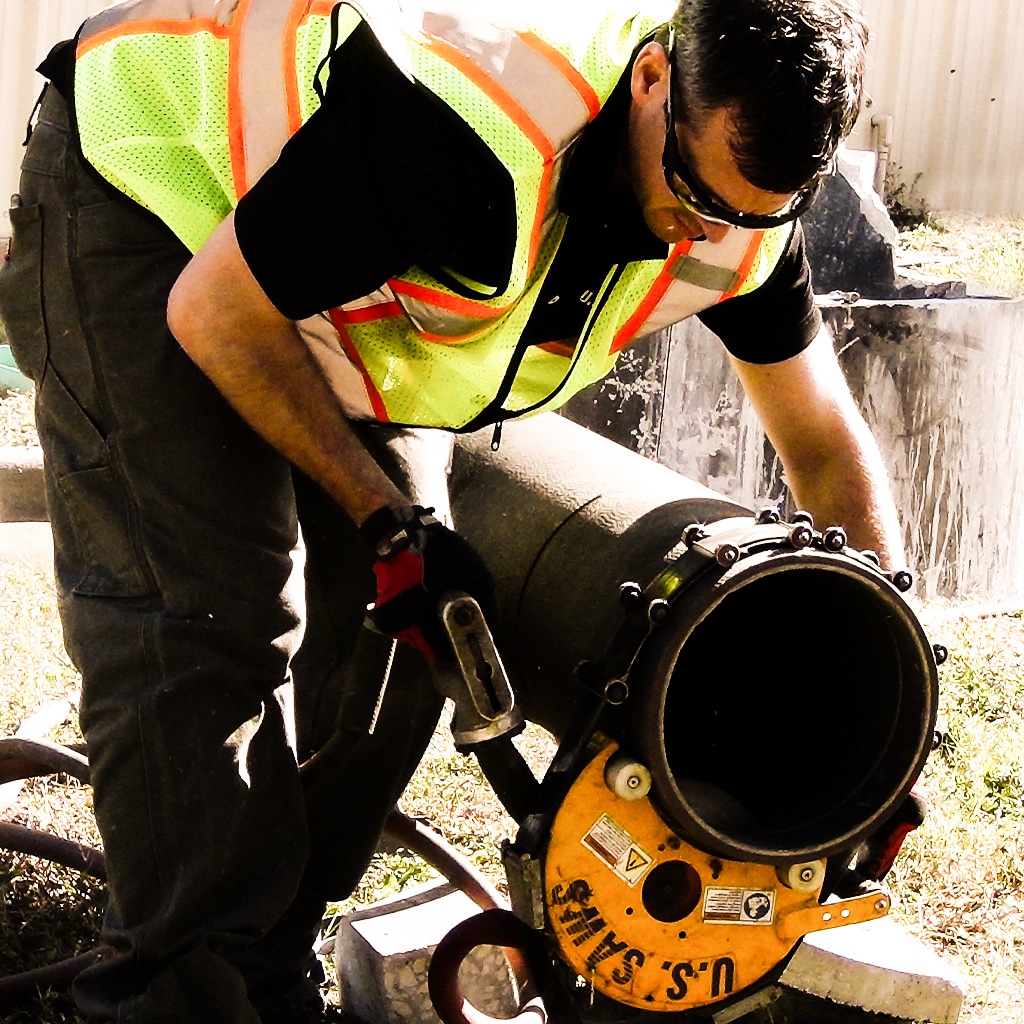
For cutting pipes in wet conditions, a belly saw offers both safety and precision. The guard design covers the blade, and straps attach directly to the pipe to prevent kickback.

The U.S. SAWS Air Powered Belly Saw comes in sizes for pipes from 8 to 72 inches and handles PVC, ductile iron, cast iron, and other heavy-duty materials with its Tiger Tooth blade. Being air-powered, it’s safe for wet environments and eliminates harmful fumes.

How the Right Municipal Water and Sewer Tools Improve Safety and Efficiency

Proper municipal sewer tools reduce physical strain, improve job site safety, and increase efficiency. From magnetic lifters that save workers’ backs to air-powered saws that cut cleanly without fumes, the right equipment not only improves workflow but also extends the life of municipal infrastructure through better maintenance practices.

Where to Find Reliable Municipal Water and Sewer Tools

U.S. SAWS is a leader in the underground tool industry. Whether you need a manhole cover lifter, a valve exerciser, or a belly saw, we have the municipal water tools to make your work safer and more efficient. Contact us today to discuss updating your water and sewer toolbox.
Everything You Need to Know About Valve Exercisers

Why Do We Need Valves and Valve Exercisers?

Valves are crucial to the transportation of municipal water from place to place, as well as in sewage processing and plumbing systems.  Even the human body has valves!  From the age of the Romans and their aqueducts, valves have been used to control the flow of water to households.  While valves are vital to regulating, directing, and controlling the flow of water, valves are also used with gases, solids, and slurries.  Modern-day municipal water and waste agencies use valves to direct water flow, adjust water pressure, shut down water access, and prevent backflow.  The public water systems are vital to a community’s infrastructure, and the citizens depend on the uninterrupted supply of potable water.  Should a valve fail to prevent backflow, an entire community’s water supply will become contaminated and unusable until properly sanitized.  When those valves fail, it is up to the municipal workers to access the faulty valve(s) and repair and/or replace it.

The best way to avoid damaged valves is through the user of a valve exerciser.  Much like a treadmill helps exercise your heart (and all of its valves), a valve exerciser is a tool used to turn valves on and off repeatedly to ensure the valve does not become stiff and malfunction.  Valve exercisers are vital to the uninterrupted flow of water for cities and surrounding communities.  Without this maintenance, valves will wear and not be able to fully do their jobs.  Nobody wants a backflow of sewage in their drinking water.  To ensure faulty valves are not an issue, municipal agencies will create valve exercising programs where workers conduct valve turning with their valve exercisers to loosen and then tighten the valves down again to ensure they are functioning optimally and have not seized or suffered from corrosion.  Regular use of valve exercisers helps keep the valves limber and free of debris.

Advances in Technology

Valve exercising is not as easy as it may appear.  It can be back-breaking work that has to be done with precision.  Thousands of people rely on the proper functioning of those valves that are being exercised.  Valves are not always placed in the most easily accessible locations.  As a matter of fact, to avoid non-municipal affiliated people from tinkering with the valves, many are placed in hard-to-reach areas.  This makes accessing valve exercisers difficult for the workers and their valve turning. The early 2000s saw truck-mounted valve exercisers that were both inconvenient and expensive. In an effort to alleviate some of the expense and size of the truck-powered valve exerciser which was needed to access and turn some stiff and corroded valves, companies like U.S.SAWS have developed technology like lightweight, battery-powered valve exercisers.  The portability of these valve exercisers makes turning valves a much simpler task.   As valve exercising research and development has grown, it has allowed advances in other repetitive valve operations as well, such as hydrant exercising.

The U.S.SAWS VEX-400

The U.S.SAWS VEX-400 is a perfect example of a solid, portable valve exerciser with the power and safety features needed for successful valve work.  These exercises are made of alloy aluminum and hardened steel which use a Metabo drill motor as its power source.  Safety features include a trigger handguard, stable foot base, overload protection, and a shear key that will break before the gearbox, preserving the integrity of the exerciser and its user.  This device has a rotation counter that tracks turns rotating in either direction, comes with three batteries for a full day’s work without the need for recharging, and has multiple extensions allowing the user access to a wide range of valve depths.  This powerful tool also has variable torque settings ranging up to 400 peak ft/lbs.  After use, it breaks down for easy transport in its carrying case.

U.S.SAWS has a valve exerciser to meet any municipal worker’s needs from the portable and powerful VEX-400 to the Deluxe Valve Exerciser Package – Hydrant KitContact us today to discuss your options.

Pipe Beveling Tool Selection

Beveling cut ends of water main pipe after an in-field cut is required to reduce the chances of damaging Bell end gaskets during installation.

The difficulty in the beveling process is keeping a consistent and smooth finish while using basic hand tools.

Mechanical beveller’s have advanced with the use of battery-powered tools in high speed cutting heads making the job extremely easy and fast.

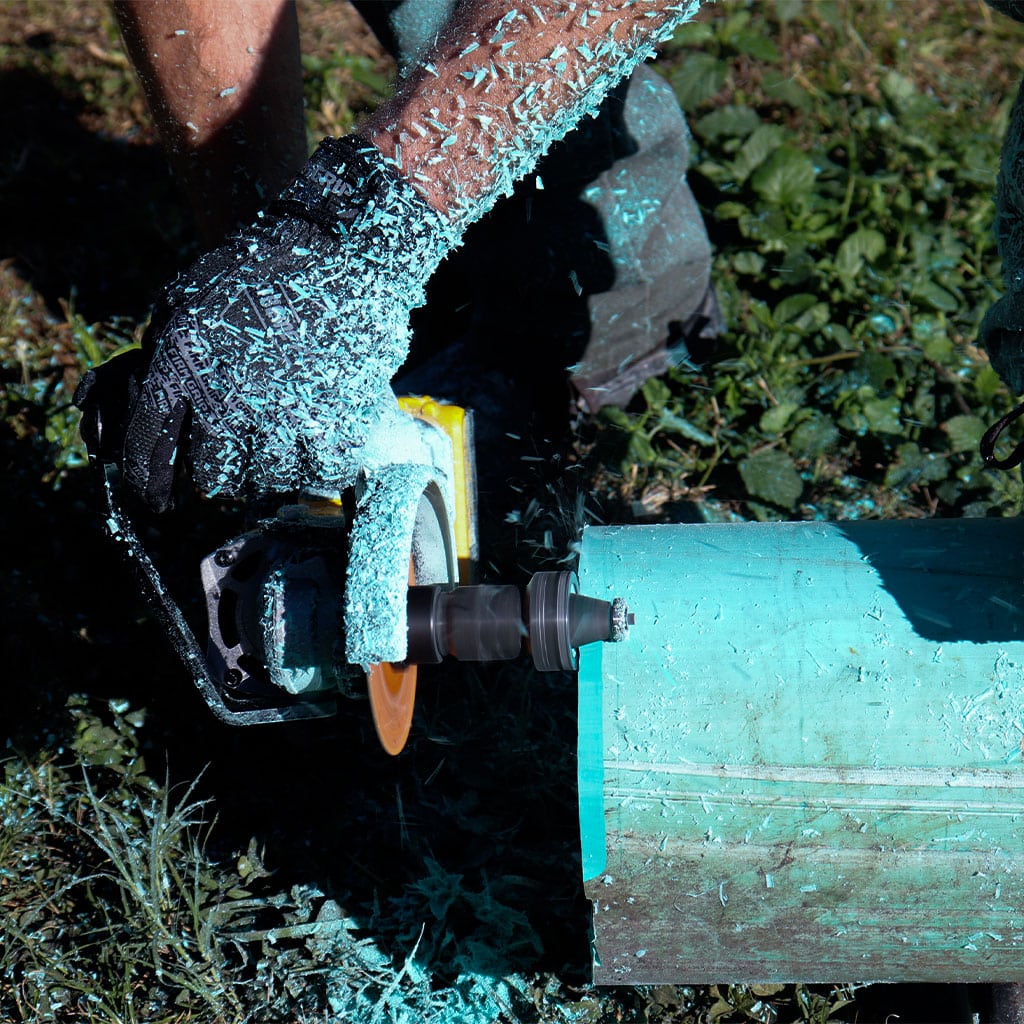
U.S.SAWS manufactured several tools for beveling PVC pipe in the trench allowing for quick installation and excellent results .

Because of changes in pipe size in classification having a tool that is adjustable in offered in many forms to fit tools like battery-powered grinders, gas-powered saws, eliminate the need for difficult handwork.

Field repairs often allow little room to access the ends of cut pipe. The U.S.SAWS bevel tools allow tight access with very little clearance required.

For pipe sizes 6 inches through 12 inches, US Saw’s Recommends the use of an 8 flute or 16 flute cutting tool. These 2 beveller’s have identical cutting profiles but are designed for either low power hand tools (16 flute) or high powered gas construction saws (8 flute). These cutting heads meet requirements of ASTM standards and AWWA installation standards For proper bevel dimensions. For pipe sizes, 16 inches and larger US Saws recommends the 3 flute beveller version used on a gas-powered saw.

Because these cutting tools work on a variety of sizes it is a one size fits all application. Most other manufacturers require the purchase of multiple tools for different sizes of pipe making the process expensive and the loss of parts a reality.

Underground Cutting Made Easy and Safer

Underground cutting for utility repairs has evolved. Public utility companies have used a variety of cutting tools for in-trench pipe repair
In the past, such as gas construction saws, reciprocating saws, snap cutters, and other methods to remove sections of a damaged pipe.

Today’s workforce recognizes the need for safer, dedicated equipment designed to solve this job. Because of this, workers are moving away from conventional handheld rotary-blade machines that can be difficult to operate in confined spaces with tools attached to the pipe.

In this blog, we explore how underground cutting technology—especially innovations like air-powered chainsaws and the belly saw—has made in-trench pipe repair safer, faster, and more efficient.

The “Belly Saw”: Underground Cutting at the Bottom of the Pipe

For over 30 years, U.S.SAWS has been an innovator in underground cutting equipment and innovative tools for the water and sewer industry. Our modified grinding systems, specialized cutting blades, and emissions-free air-powered tools help reduce injury risk. Attachment systems that secure the tool to the pipe also reduce kickback potential in the trench.

U.S.SAWS designed the belly saw to cut the bottom part of a pipe safely and efficiently. The saw straps to the pipe with a roller assembly, allowing it to move freely around the pipe’s diameter and produce a straight, burr-free cut. The most popular version of this tool can cut pipes from 8″ to 24″ in diameter, with additional models available for 24″–48″ and 48″–72″ diameters.

One key advantage is a limited depth of cut—about 1 ¼″—which keeps the blade from dragging in residual water and reduces the horsepower required during the cut. In real-world utility work, the belly saw remains one of the most cost-effective, fast, and safe underground cutting options available.

Underground Cutting Chainsaws Built for Wet Environments

Pipe-cutting chainsaws have transformed underground utility repairs over the last decade. These machines can cut ductile iron, cast iron, PVC, AC pipe, and more. Because the air-powered chainsaw runs on pressurized air, it can operate underwater and in extremely wet conditions without disadvantage.

To increase usefulness and safety, U.S. Saws offers pipe clamp and roller assemblies that secure the saw to the pipe during cutting, providing a stable, precise setup for bottom-up cuts. This approach delivers several benefits in the repair process:

  • Residual water drains out through the bottom cut.
  • The bar moves away from the operator, helping avoid kickback.
  • Minimal user effort is required.
  • A small tab of pipe can be left at the top to secure the workpiece until final removal.

Moving Away from Gas-Powered Handhelds in Underground Cutting

Removing gas-powered handheld devices from the trench has been a U.S.SAWS mission for many years. With the development of the belly saw and the air-powered pipe-cutting chainsaw and hydraulic belly saw, operators gain clear advantages in safety, precision, and convenience during underground cutting and repair work.

Standards & Safety References for Underground Cutting

Cutting inside a trench or excavation must follow established safety practices. Crews should confirm trench protections and air-tool safety before work begins and follow post-repair disinfection procedures when cutting potable water lines.

  • Trenching & Excavation: protective systems, safe access within 25 ft, and engineered designs for deeper trenches (OSHA Trenching and Excavation Fact Sheet).
  • Pneumatic/Air-Powered Tools: secure hose connections with safety clips and retainers; inspect air hoses regularly (OSHA 29 CFR 1926.302(b)).
  • Confined Spaces in Construction: assess whether the trench qualifies as a permit-required confined space (29 CFR 1926 Subpart AA).
  • Water Main Disinfection: follow AWWA C651 Standards for disinfecting new or repaired potable mains.

Operators can choose from air-powered or hydraulic belly saws depending on site conditions, pipe size, and available power sources.

Quick Pre-Cut Checklist for Underground Cutting Crews

Verify trench protection and safe egress are in place (NIOSH Trenching Safety Overview).

  • Inspect the air-powered chainsaw/belly saw and pneumatic hose connections.
  • Strap and mount the tool securely before making a bottom-up cut to drain residual water and minimize kickback.
  • Confirm material and diameter range (ductile iron, cast iron, PVC; 6–72″ options).
  • Coordinate disinfection and flushing for potable mains per AWWA C651 after repairs.

FAQs Under Ground Cutting Tools

What materials can an air-powered pipe-cutting chainsaw handle?

Ductile iron, cast iron, PVC, AC pipe, and other common utility materials.

Why is a bottom-up cut safer in a trench?

It allows water to drain, directs the bar away from the operator, and reduces kickback when combined with a pipe-mounting device.

What pipe sizes does the belly saw cover?

Standard models cut 8″–24″, 24″–48″, and 48″–72″ diameters.

The Future of Underground Cutting – Final Thoughts

Underground cutting continues to evolve as safety standards tighten and technology advances. Tools like the belly saw and air-powered pipe-cutting chainsaw show how innovation can reduce risk, improve precision, and simplify complex in-trench repairs. At U.S. Saws, decades of engineering experience and field testing have shaped a product line designed specifically for the challenges of confined-space utility work. From water and sewer systems to municipal maintenance teams, U.S. Saws remains committed to delivering reliable underground cutting solutions that keep crews safe, efficient, and compliant on every job.

Picking the right magnetic manhole lifter saves time & the risk of injury

Removing manholes can be harder than you think. Not only are these lids heavy, they often do not have adequate pick holes or lifting holes.
Manhole lids can weigh up to 200 lbs or more, add that to being wedged or frozen in place with sand, corrosion, and asphalt, removing them can be very challenging.

There are many use cases where workers need to create their creative methods for removing a lid, such as crowbars, shovels, screwdrivers, and even worse—fingers.

Using a dedicated manhole magnetic lifting tool not only saves the risk of injury, but it also saves time. Operators that need to open over 12 lids per day for grease trap or stormwater collection inspection know that ease in lifting and replacing lids is essential for efficiency and reducing the chance of injury.

U.S.SAWS manufactures two distinct types of lifting systems:

First, a fold-out dolly that uses a switchable magnet. This system offers a significant mechanical advantage to lift lids easily. This system is best if the operator needs to lift the lid free and clear of the opening. Some lids have flanges or casting lugs under the bottom edge that catch and prevent removal with drag out systems, like utility hole hooks. The additional benefit is that more than one magnet could be used at one time for lifting extremely heavy lids or unusually shaped objects. These have a range of average 100 lb lids to 500 lb lids.

The Second lifting system is designed to take up less room in a truck and is a “slide-out” style lifter. U.S.SAWS calls this the “Break and Take” line of magnetic manhole lifters. These lift the edge of the lid and unseats the lid. Then the operator slides the utility hole lid out of the opening. This method is beneficial for flat bottomed lids up to 300 lbs.

With a variety of magnetic tools to assist daily operations, U.S.SAWS leads the industry with tools and equipment for safer and easier manhole lifting needs.

STAY SHARP!


Sign up to receive the latest info on new U.S.SAWS products, special offers and more. Enter your information below to subscribe to our email list.

© 2026 U.S.Saws All Rights Reserved. Website Designed And Developed By Power On Marketing

[]